- Vietnam
- Asia
- River Cruises
- Duration
- 13 Days
- Dates
- Jan, Feb, Mar
- Starting from
- $14,500 per person
Call +1.800.397.3348 or Request a Quote
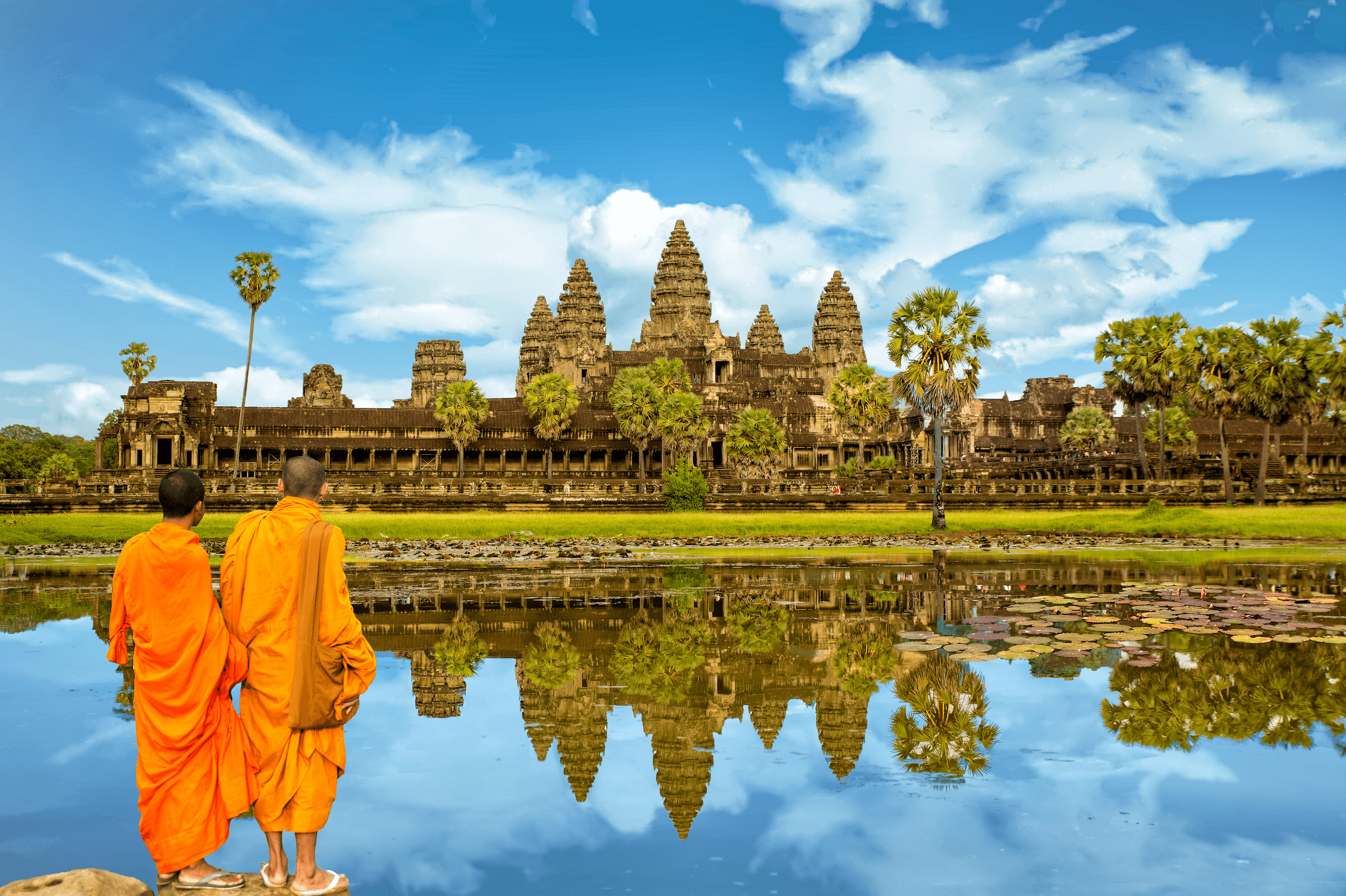
In the 12th century, at the peak of the Khmer Empire’s power, Angkor was the capital city of the largest urban center the world had ever seen—or would see for the next 700 years to come. The immense state temple of Vrah Vishnulok, King Suryavarman II’s monument to the Hindu god Vishnu, was the largest religious monument in the world at the time. Today, we know it as Angkor Wat, and it still retains that impressive superlative.
Cambodia’s icon of national pride, Angkor Wat is just one of many structures still standing within the greater Angkor complex—an expansive network of Khmer temples, shrines, and capital cities that include wonders like Angkor Thom, Ta Prohm, and Banteay Srei.
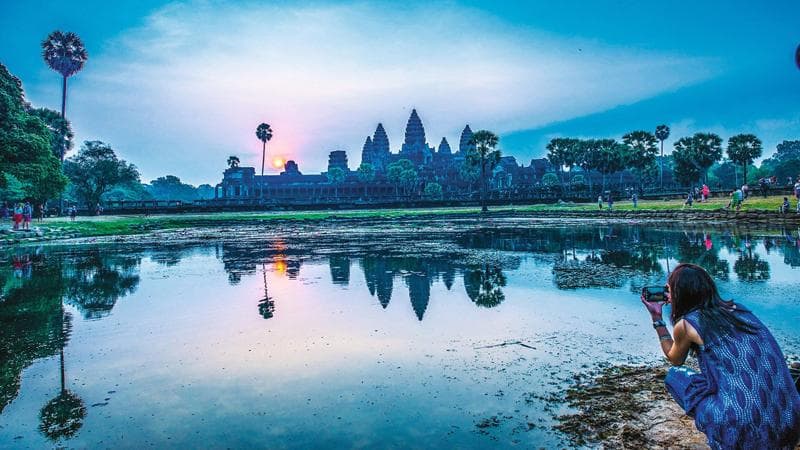
While the abundance of architectural masterpieces is enough to keep you busy on its own, we have more to show you in Angkor when you join us aboard The Jahan: sunrise walks with our certified photo instructor, al fresco dinners among stately ruins, and modern workshops teaching age-old Khmer artistry. Have a look at some of the sites you'll explore within the UNESCO-recognized temple complex of Angkor.
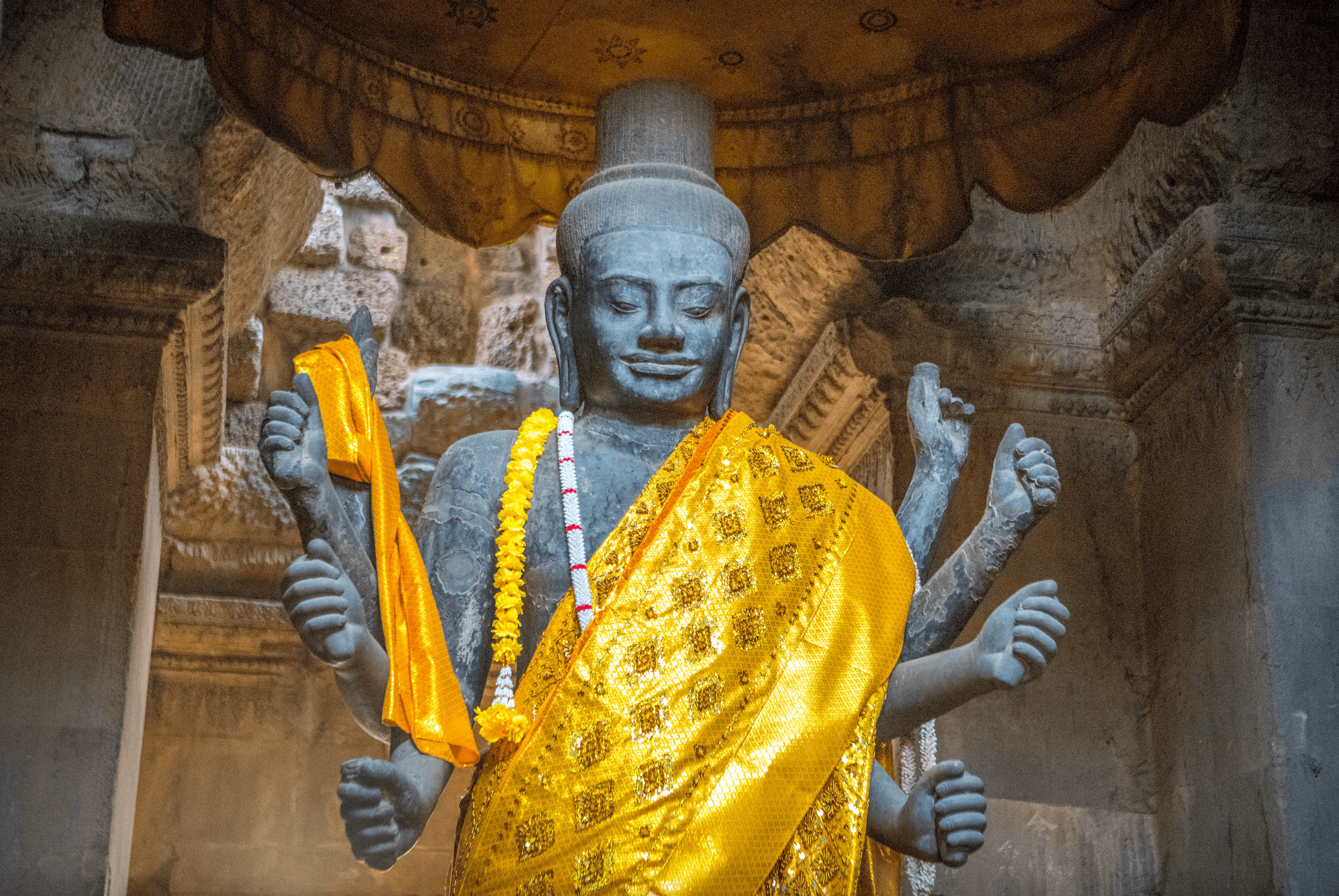
Nearly 1,000 years after the temple’s construction, visitors approaching Angkor Wat are still received by the same stone sentinels that stood at the water’s edge in the 12th century. Statues of proud guardian lions and cobra-like, seven-headed naga line the causeway that leads to the central terraces, where more Khmer statuary awaits. Though sculptures of Buddha abound, the temple’s most venerated work is a towering avatar of Vishnu: an eight-armed, 16-foot masterwork called Ta Reach that may once have stood in Angkor Wat’s central shrine.
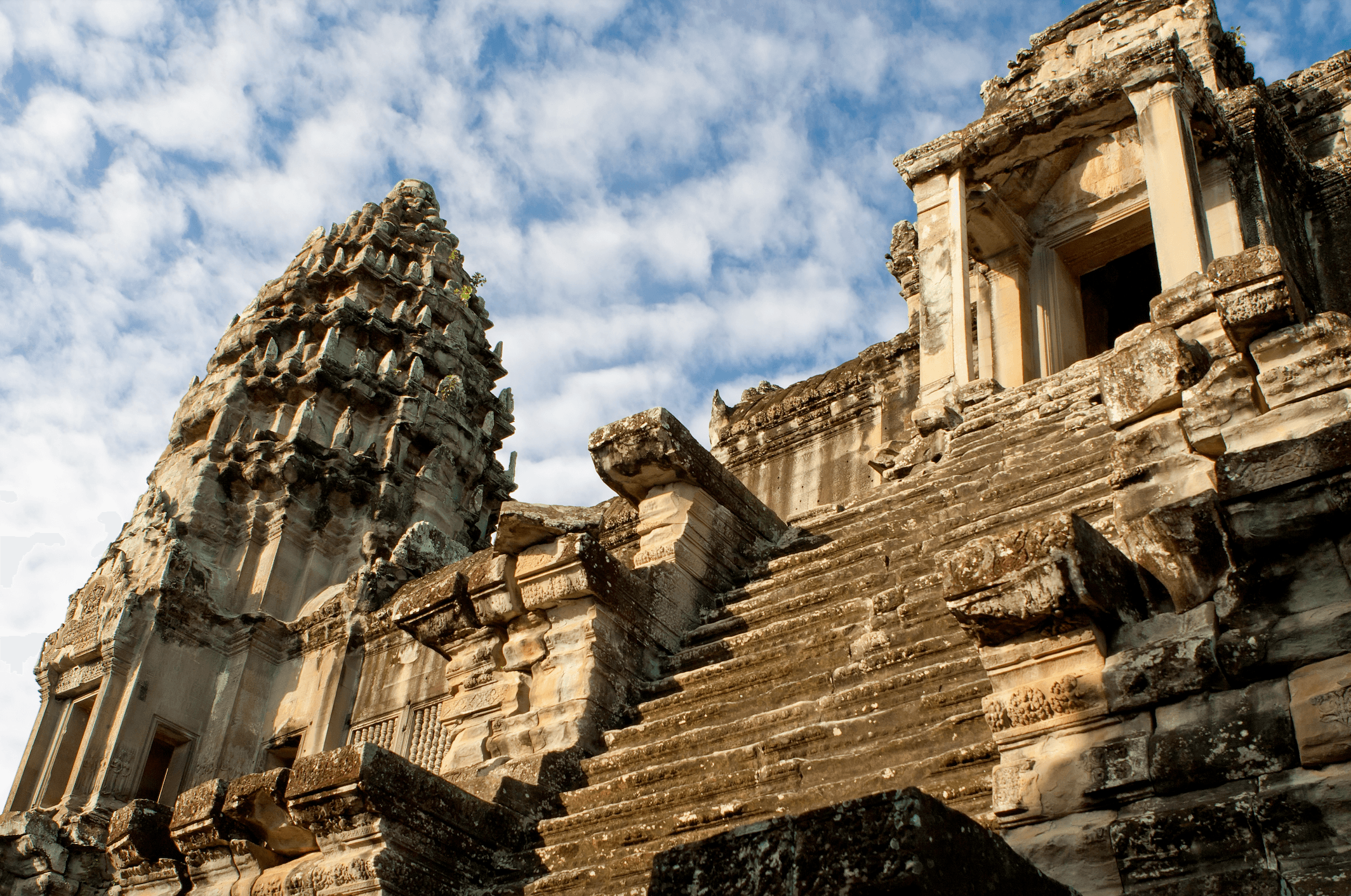
King Suryavarman II envisioned Angkor Wat as the earthly representation of the entire Hindu cosmos. He designed the heart of the complex in the image of Mount Meru—the center of all universes and the home of the Hindu gods. The central structures comprise carved terraced galleries, with courtyards ascending one after another to the uppermost level, or bakan. Here, at a height of almost 200 feet, a quincunx of lotus-bud towers evokes Mount Meru’s five sacred peaks. This holiest area of Angkor Wat harbors an inner sanctum with some of the temple’s most detailed engravings, and outside views offer panoramas of creation all around.
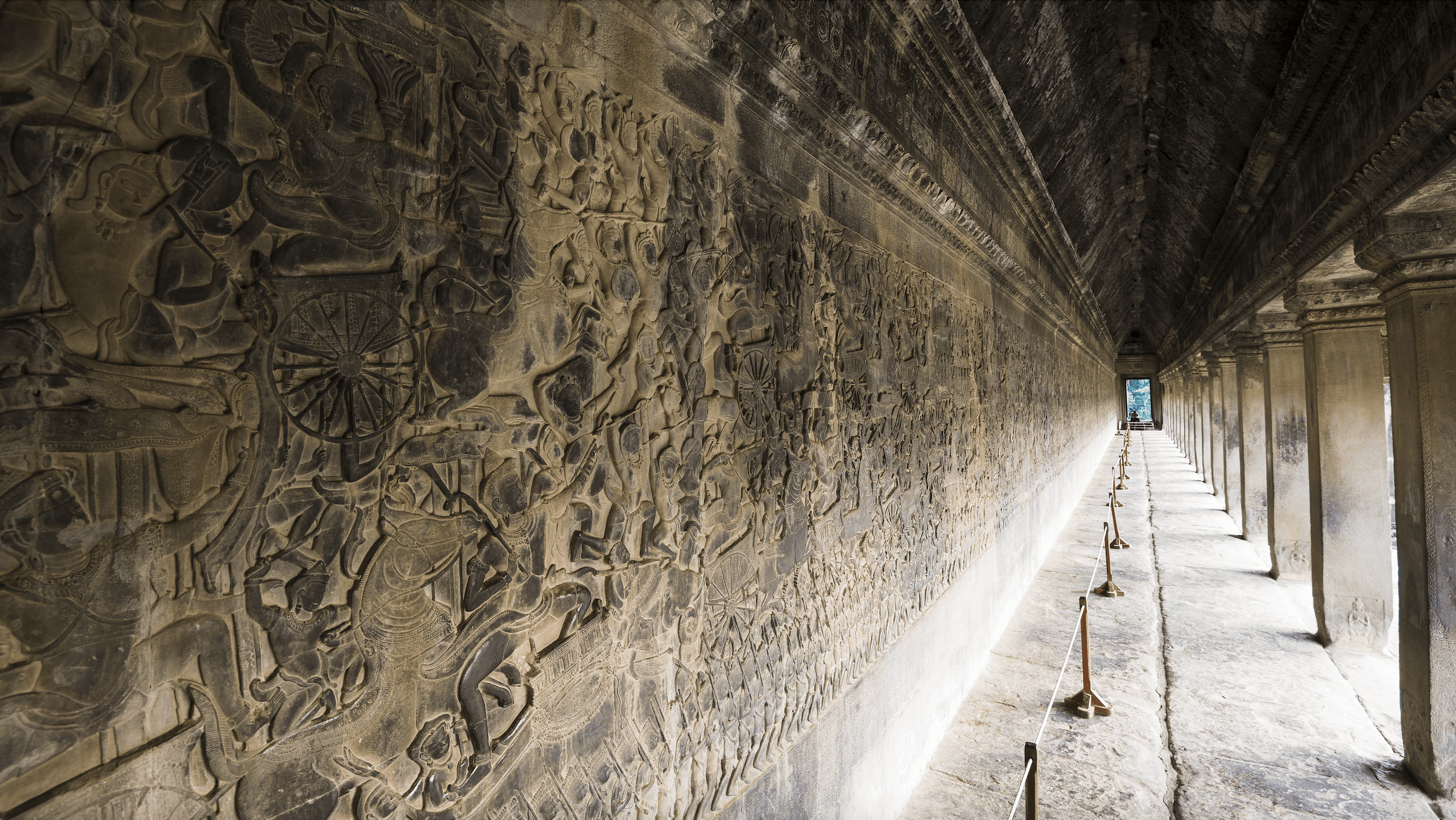
From the ornate gopuras that flank its moat to the tips of its innermost towers, Angkor Wat’s sandstone constructions are covered in stunning bas relief artistry. Divine beings and historical figures of Hindu tradition feature prominently: sprightly apsaras dance along corridor friezes, devatas pose beneath corbeled arches, and Vishnu himself presides over cosmic affairs in vast etched murals. Walk the perimeter of the outer gallery to witness scenes from the Ramayana and the Mahabharata—the world’s longest epic poem. Together, the bas relief pieces comprise nearly 13,000 square feet of what renowned archaeologist Charles Higham calls “the greatest known linear arrangement of stone carving.”
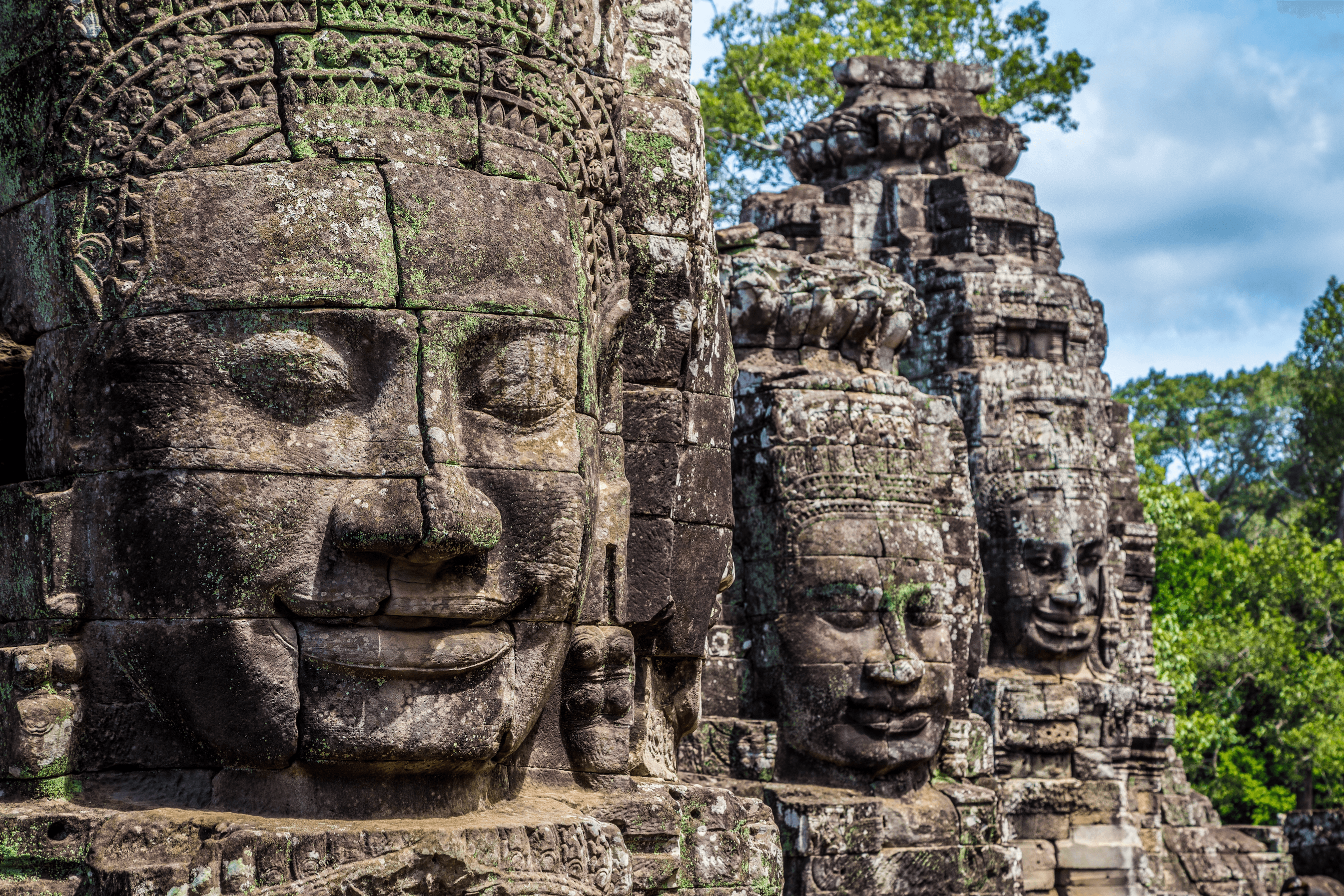
Not to be outdone by his predecessor’s work at Angkor Wat, King Jayavarman VII commissioned for his capital city of Angkor Thom a state temple of singular prestige: the Bayon. While echoing many of the structural themes seen in earlier temples, the Bayon is distinguished by the multitude of immense, smiling faces gracing the temple’s towers. From varying elevation, 216 weathered sandstone visages—likely that of the king himself—look down placidly upon the tightly terraced courtyards, dense galleries, and rounded sanctuaries of the Bayon that came to define the eponymous architectural style.
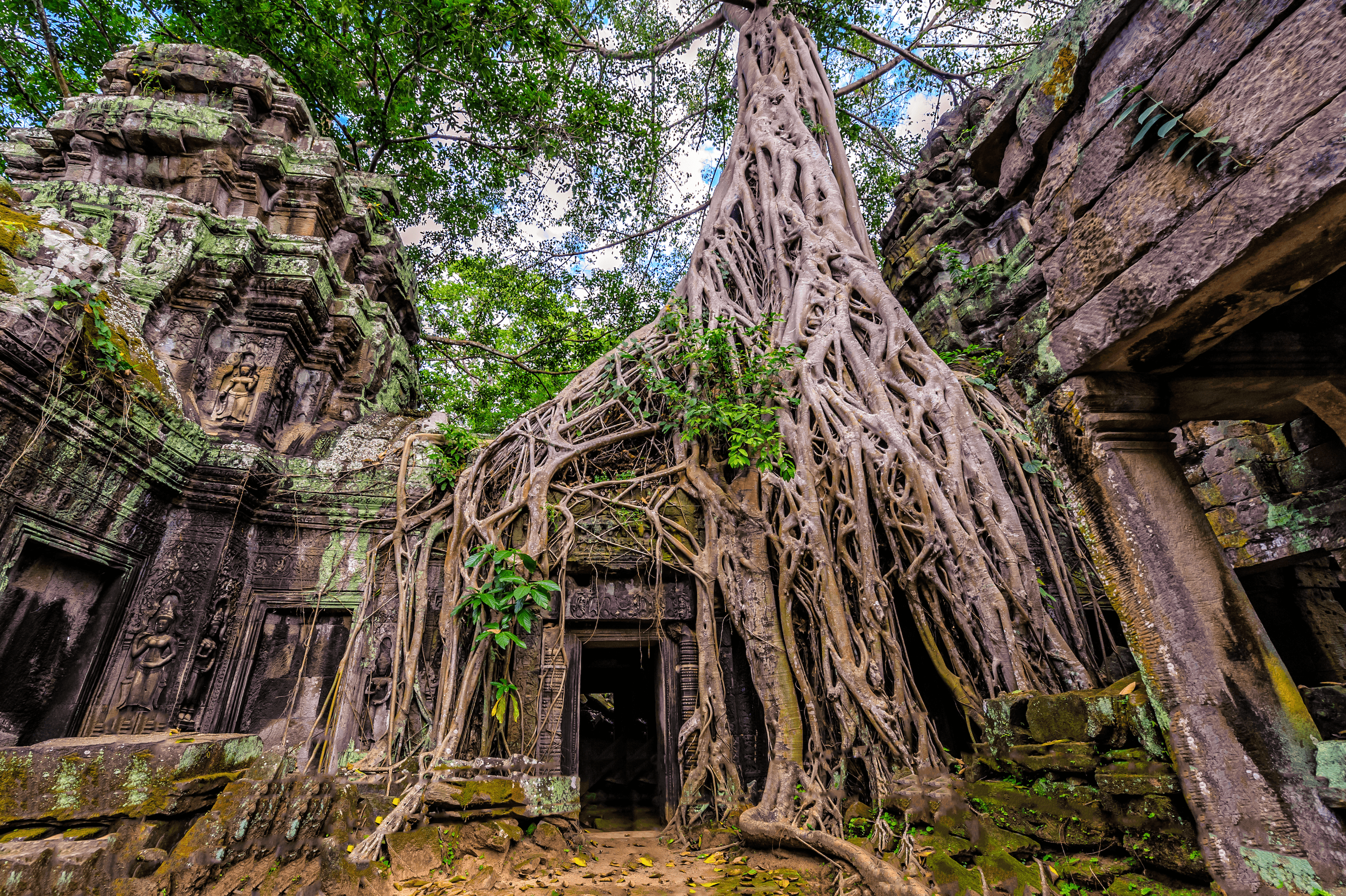
With the decline of the Khmer Empire in the 15th century, much of the Angkor complex fell into neglect, the ruins only attended to by creeping vines and flourishing trees. While restoration efforts have cleared the jungle’s leafy blanket from many other sites, the temple of Ta Prohm remains seemingly untouched, its stonework entangled with centuries of growth. In this 13th-century Buddhist monastery, thick Banyan roots spill over columned galleries and stout trunks soar skyward from rubbled walls, their grip over the crumbling foundations striking a delicate balance of destruction and protection.
Travelers to Banteay Srei, the 10th-century “Citadel of Women” dedicated to the Hindu god Shiva, encounter a minor curiosity—a red sandstone construction unusually diminutive in both plan and structure. Perhaps making up for its size, the monastery is decorated with statuary and bas relief artwork of incomparable detail. Khmer aesthetics run the gamut here: demonic dvarapalas guard entryways, sharp-toothed kala leer from flowered motifs, and alluring devatas stand out against backdrops of exquisitely ornamented stonework.
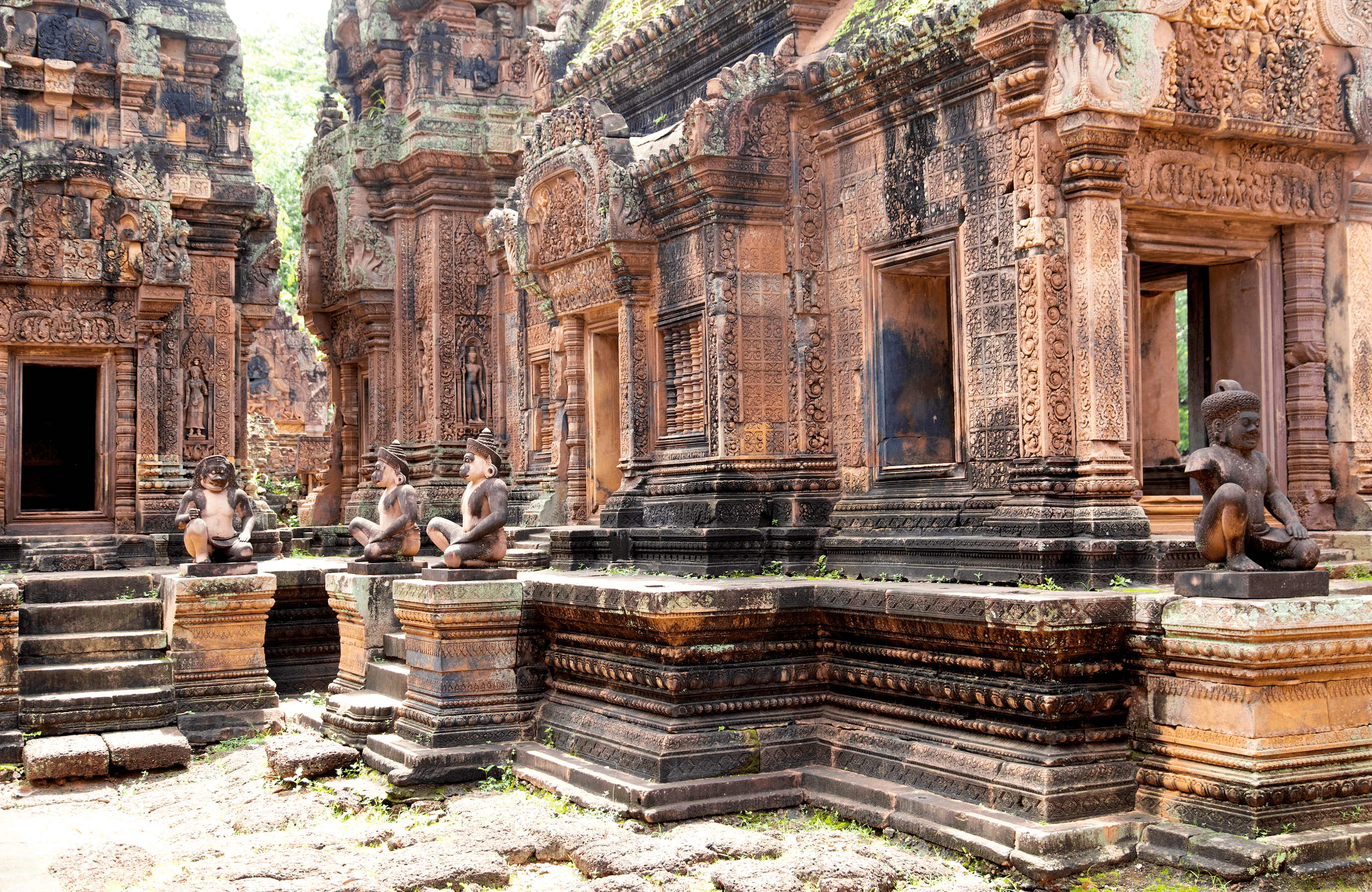
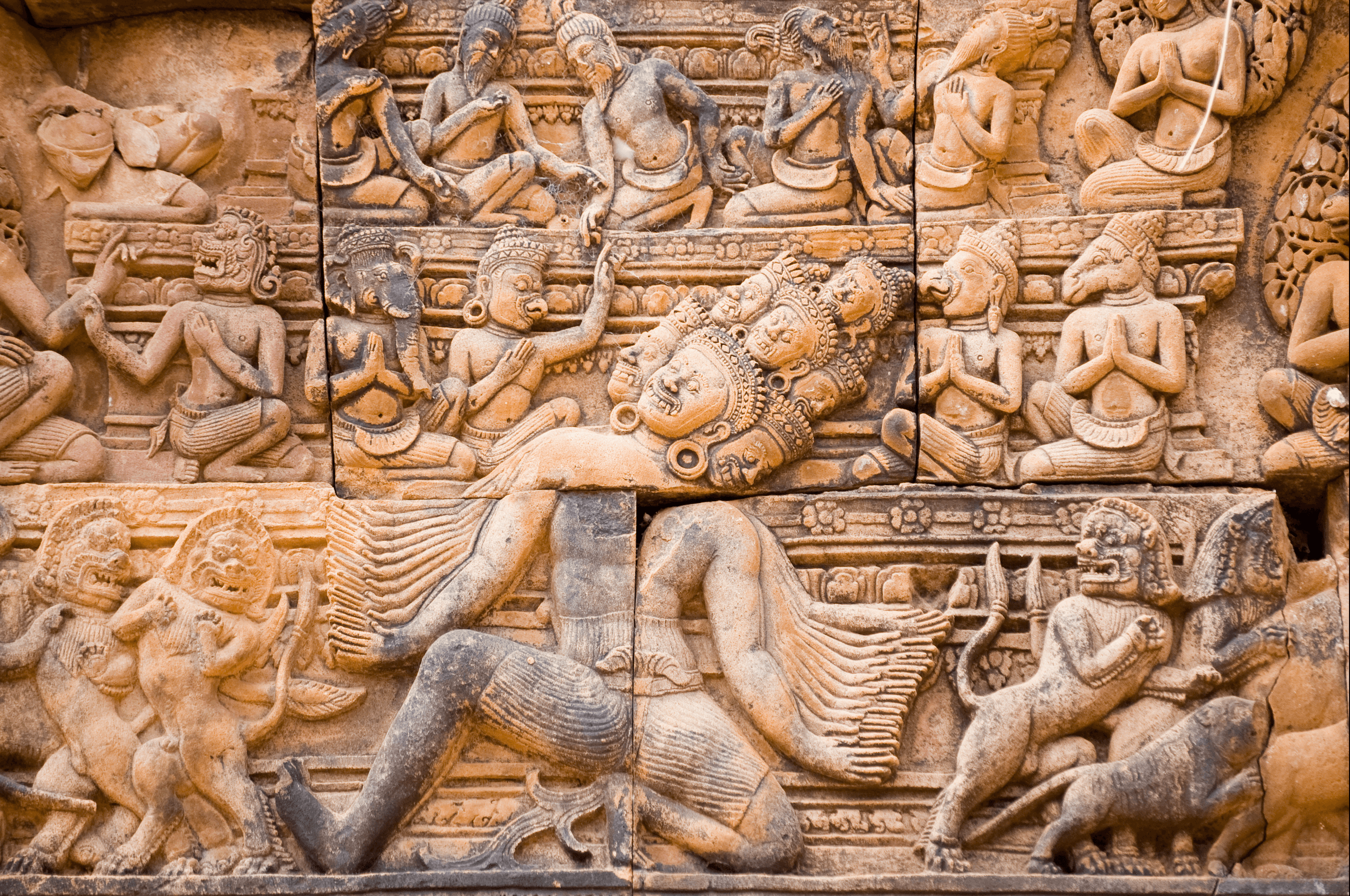
Within a temple already famed for extravagant architecture, two buildings stand out as treasures: the libraries of Banteay Srei. The red-rock structures, decked out in Khmer decorative flourish, sport pediments with richly illustrated narratives. Scenes from the Mahabharata show Krishna and Arjuna aiding the god of fire, Agni, against Indra’s torrential downpour. Shiva, with full entourage, quells evil Ravana on one tympanum and incinerates meddling Kama on another, while the tyrannical Kamsa suffers divine vengeance under Krishna’s hand.