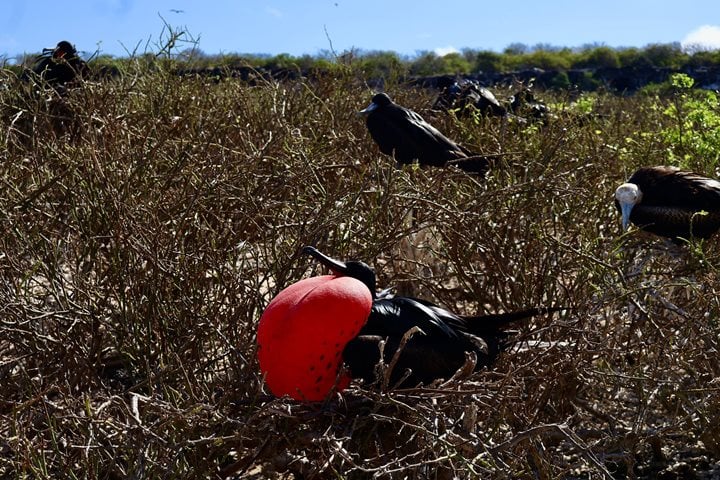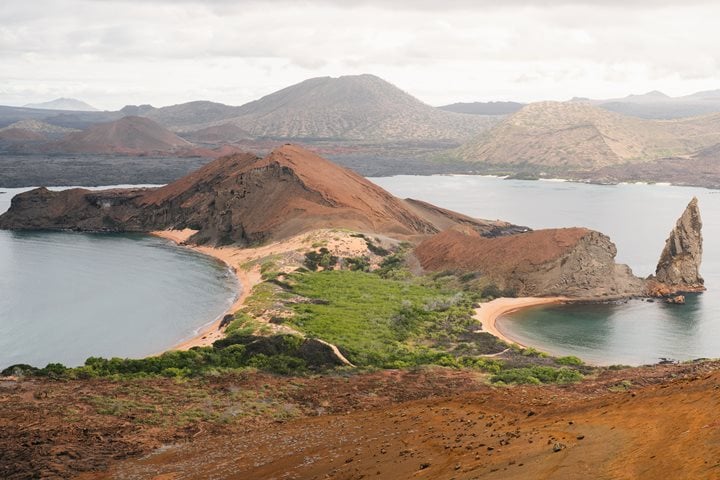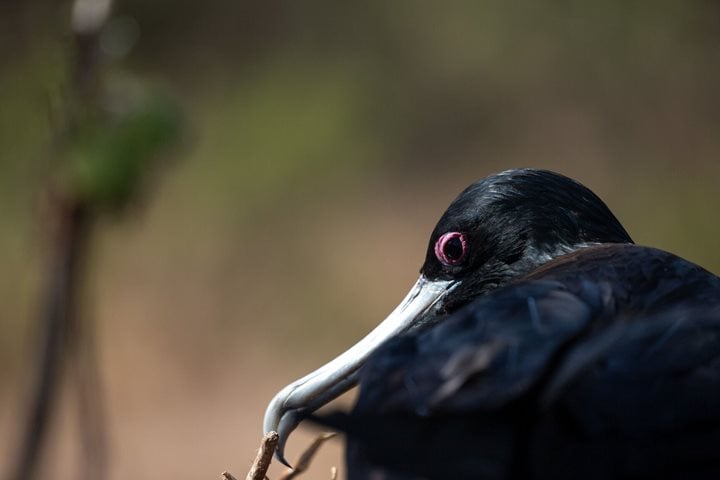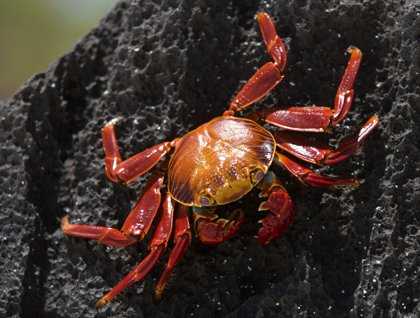
Española Island, also called Hood Island by pirates who explored this area in the 1700s, is one of the oldest islands of the archipelago, at around 4 million years of age. The advanced age of this particular island has given the resident animal species more time to evolve in isolation.
Our morning began with a hike to the nesting grounds of the native population of Nazca boobies. As we walked along the trails that where once “pahoa-hoe” lava flows, we had a chance to see the entire breeding cycle of the Nazca boobies; we saw couples courting, couples making a nest, couples preening each other, parents incubating eggs and finally parents shifting turns to protect brand new chicks from the Galapagos hawks that were wandering around, looking for a meal.
The mockingbird of Española is one of the four mockingbird species present on the islands. Interestingly enough, it was these mockingbirds that got Darwin’s attention back in 1835; as he collected three out of the four species, he was able to observe the physical differences between them, and he realized that something strange must be happening in this place, noting “there is a difference between the inhabitants of the different islands”…
After our afternoon’s exploration, we returned to our ship with a greater understand of the importance of protecting these fragile ecosystems, not only for future human generations to see and experience, but for the unique animal species that are found here and nowhere else.