Academy Bay was our anchorage for the day. All along the coast of the bay were the signs of human civilization: houses, apartments, buildings and boats. Lots of boats. There was a sailing boat regatta in for a few days, on their way around the world!
On our Zodiacs we zipped by them towards the main town dock, where we made our way down the jetty and into local buses for the short ride to the other side of town. Our objective? The Tortoise Breeding Center operated by the Galapagos National Park. When it was originally started, it was with the expertise of researchers from the Charles Darwin Research Station. Today the Park has a good grasp on the details and the Charles Darwin Foundation can focus on other, more urgent matters in the islands, such as the control of introduced parasitic flies, monitoring fish stocks, and shark populations in the Marine Reserve, among many others.
Giant tortoises are the most iconic creatures in the islands and spark our imagination like few others can. In captivity tortoises are allowed to breed, their eggs incubated carefully and hatchlings released back onto their native islands. The purpose is not only getting population numbers back up, but to get a major herbivore back out into the environment to keep the ecosystem in balance. Humans have caused such disruption over the centuries through the removal of some species and the introduction of others. Thankfully we are on our way to restoration on many of the islands here in the Galapagos archipelago, in a large part due to the financial help given by visitors who see and understand how scientifically valuable these islands are, how fragile they are, and how easy it would be to lose them to introduced species brought by humans over the last 500+ years.
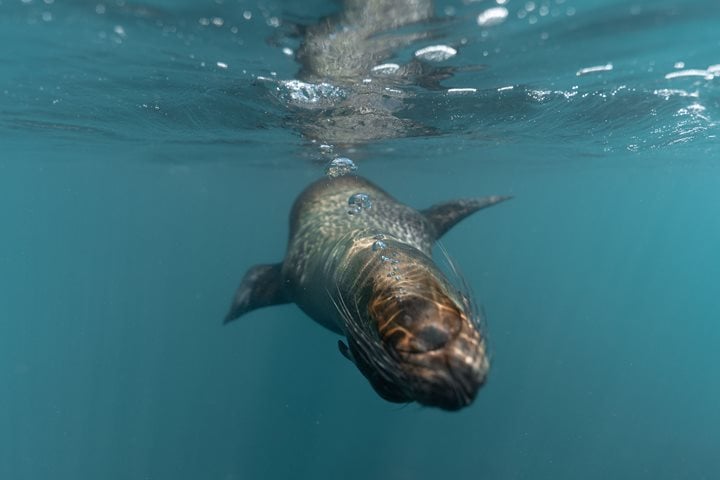
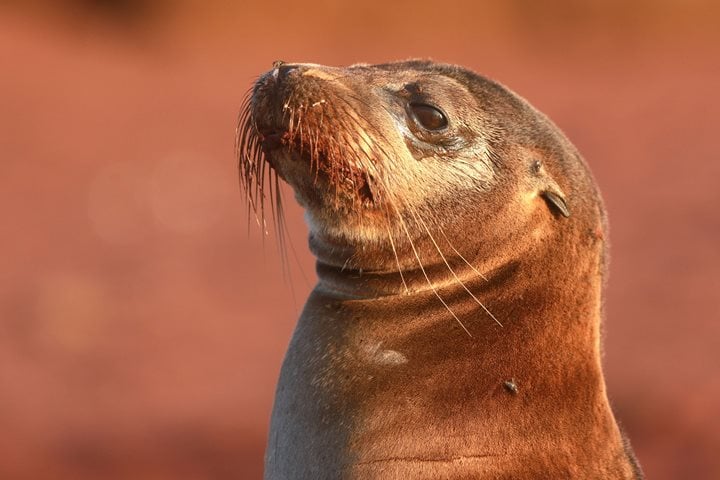
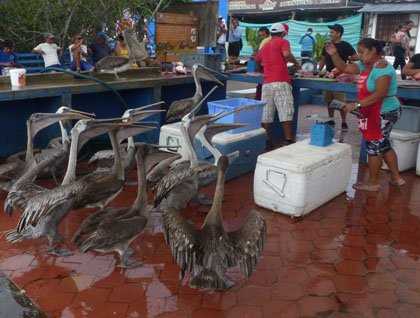
Simply walking through town is also quite the experience, especially the waterfront where the local fishermen bring their fresh catch. Here the locals (two-legged, two-winged, and four-flippered residents) gather for a meal. The brown pelicans, acutely attuned to the possibility of food, move their heads in unison, awaiting the toss of a bit of skin or tail. The sea lions, fat as can be, await bigger morsels; all of them act as efficient, photogenic garbage disposals.
On the way to our highland lunch stop we visited a small farm that grows coffee and sugar cane and in their very modest fashion, turn these into commodities desired and happily consumed by others (ourselves included): molasses, brown sugar, coffee and sugar cane rum.
A very happy group made it to lunch and afterwards kept going further into the lush highlands of Santa Cruz to look for the island’s special race (Chelonoidis porteri), wandering freely hither and yon in search of the tender shoots of grasses and shrubs.
Back on board, after a long day away from home, it was a delight to cool down and relax before recap and a musical evening with a group of talented local musicians and their dancers. Not only traditional Andean music was skillfully played on pan pipes and “charango”, but a special blend of rhythmic original compositions were performed for us after dinner.
What a wonderful day! (And what a memorable birthday, Jim!)