- Galápagos
- South America
- Duration
- 10 Days
- Dates
- Year Round
- Starting from
- $6,370 per person
Call +1.800.397.3348 or Request a Quote

The Galápagos Islands abound with activities for travelers who seek adventure in this remote archipelago, where 97% of the land is preserved in a natural park. Covering approximately 3,087 square miles—in terrain alone, not water in between—the islands are only accessible in the company of a licensed naturalist, ensuring that you will enjoy an expert perspective of the fascinating environment around you.
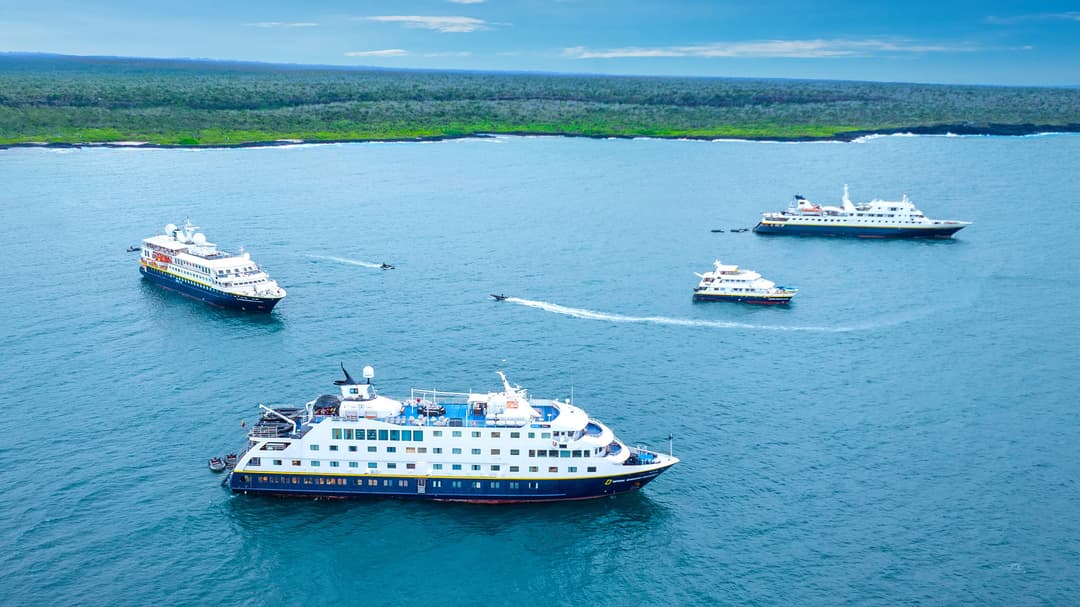
The small-ship Galápagos voyages offered by National Geographic-Lindblad Expeditions are born from relationships built and knowledge gained over 50+ years of exploration in these legendary islands. When you travel aboard the fleet, your veteran expedition team which is made up of locals from Galápagos or from mainland Ecuador will help reveal the best-kept secrets of this world-renowned destination. One of the most incredible things about Galápagos is that it is magical all year-round. The majority of animals are active throughout the whole year, so whenever you visit you are sure to encounter a wide range of wildlife, from giant tortoises and Galápagos penguins to marine iguanas and blue-footed boobies. Most travelers come to see these iconic creatures but there are myriad other sights and activities here that will make your voyage unforgettable. Here are top 10 things to do and see on your next Galápagos expedition.
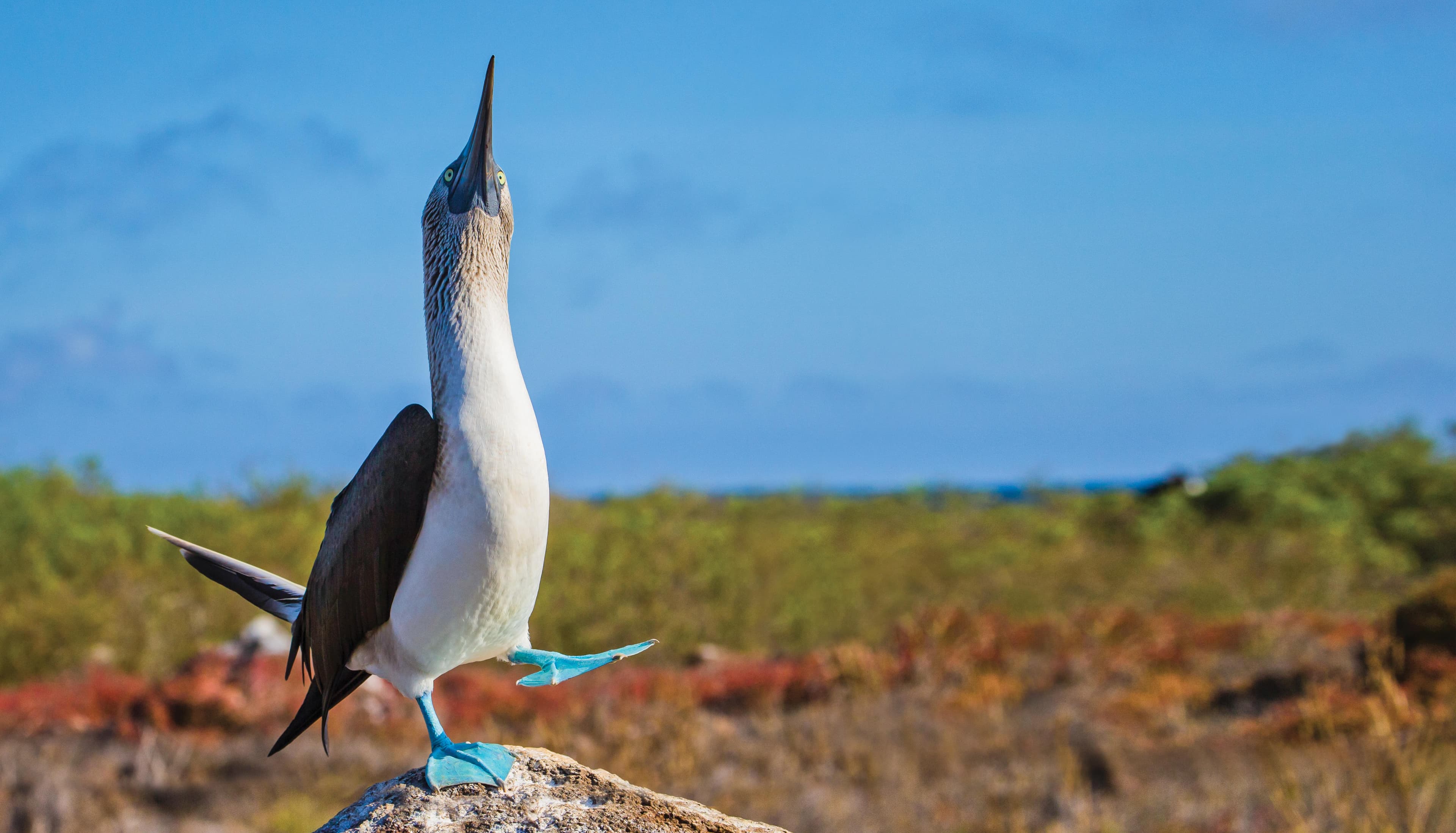
Whatever ornithological adventure you’re imagining, the Galápagos is undoubtedly going to be even better. Due to the nature of the archipelago’s famously fearless birds, your sightings will change as you move throughout the islands—but keep your binoculars up on San Cristobal for red-footed boobies, on Fernandina for flightless cormorants, on North Seymour Island for blue footed-boobies and frigatebirds, and on Española for the waved albatross, swallow-tailed gulls and mockingbirds.
Darwin’s famous finches, a now classic example of adaptive radiation, are actually 18 different species within the tanager family, various members of which can be seen across all of the islands year-round. Darwin’s finches face several threats to their existence, and on Floreana, the Lindblad Expeditions-National Geographic Fund helps support one of the largest conservation efforts of its kind ever attempted on an inhabited island to eradicate invasive species and directly help the local population of finches.
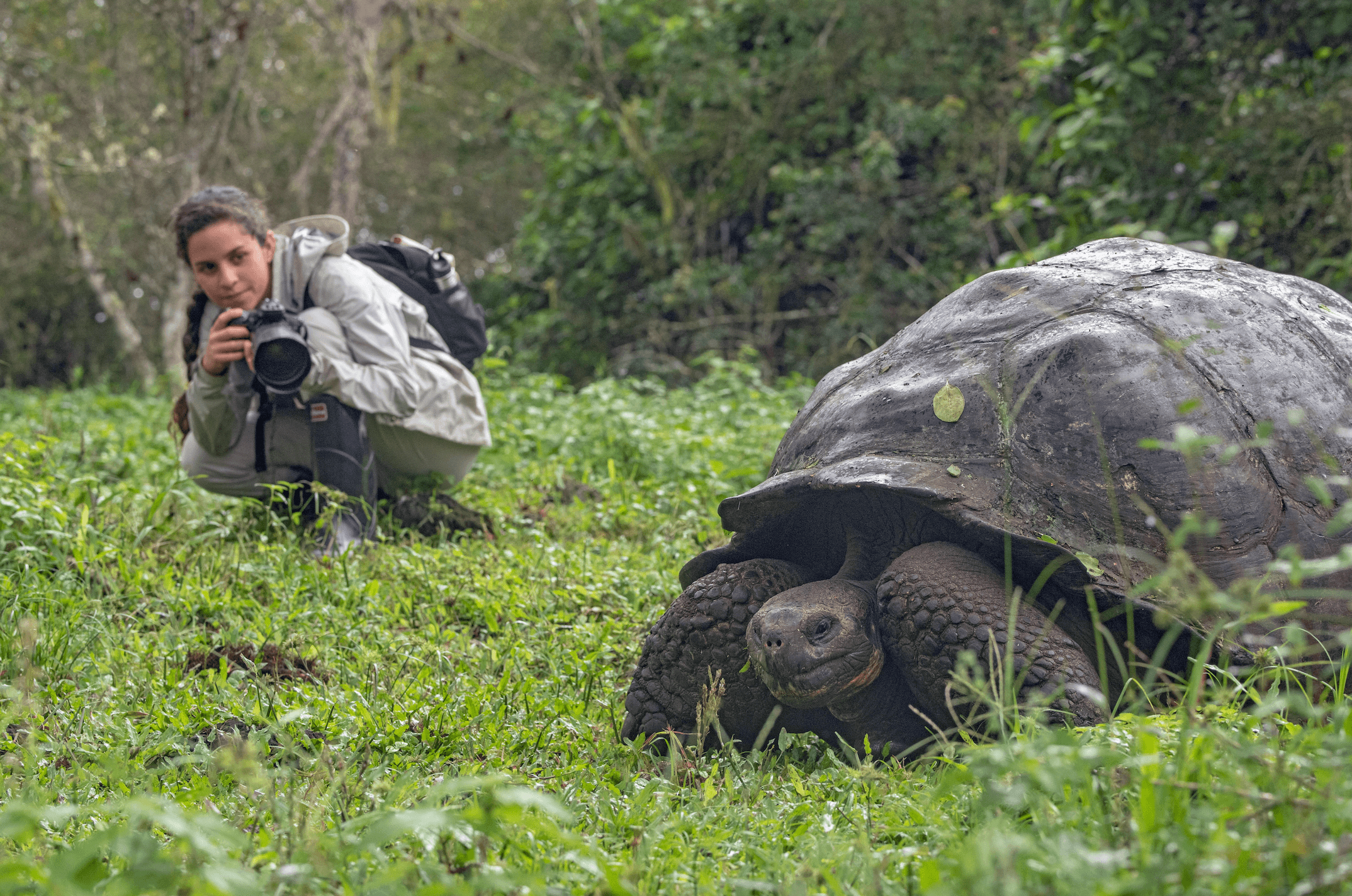
The Galápagos giant tortoise is synonymous with these islands which are actually named for the remarkable reptiles. On Santa Cruz, you'll delve into their fascinating world on a visit to the famed Charles Darwin Research Center. Here, you'll learn everything you ever wanted to know about giant tortoises, from how long they can live to how they ended up in one of the most remote places on earth, plus, witness conservation in action as you spot dozens of newborn hatchlings in the breeding program. Cap off the afternoon as you head up to the lush, grassy highlands to Rancho Manzanillo, one of the best places to walk among these gentle giants in the wild.

For anyone who loves to travel, crossing the equator is a true bucket-list item. Aboard a voyage with National Geographic-Lindblad Expeditions, you’ll mark this milestone with a champagne toast and a joyful ceremony on deck. To support your lifetime bragging rights, you’ll also receive a unique souvenir pin to commemorate the moment. For ancient mariners, the rite was known as the “baptism on the line,” or an equatorial baptism, and it could be quite violent, including beatings and a dragging behind the ship. Today, the ceremony is often explained as being an initiation into the court of King Neptune, with attendant ceremony and secret rituals—you’ll have to make the crossing yourself to learn more!
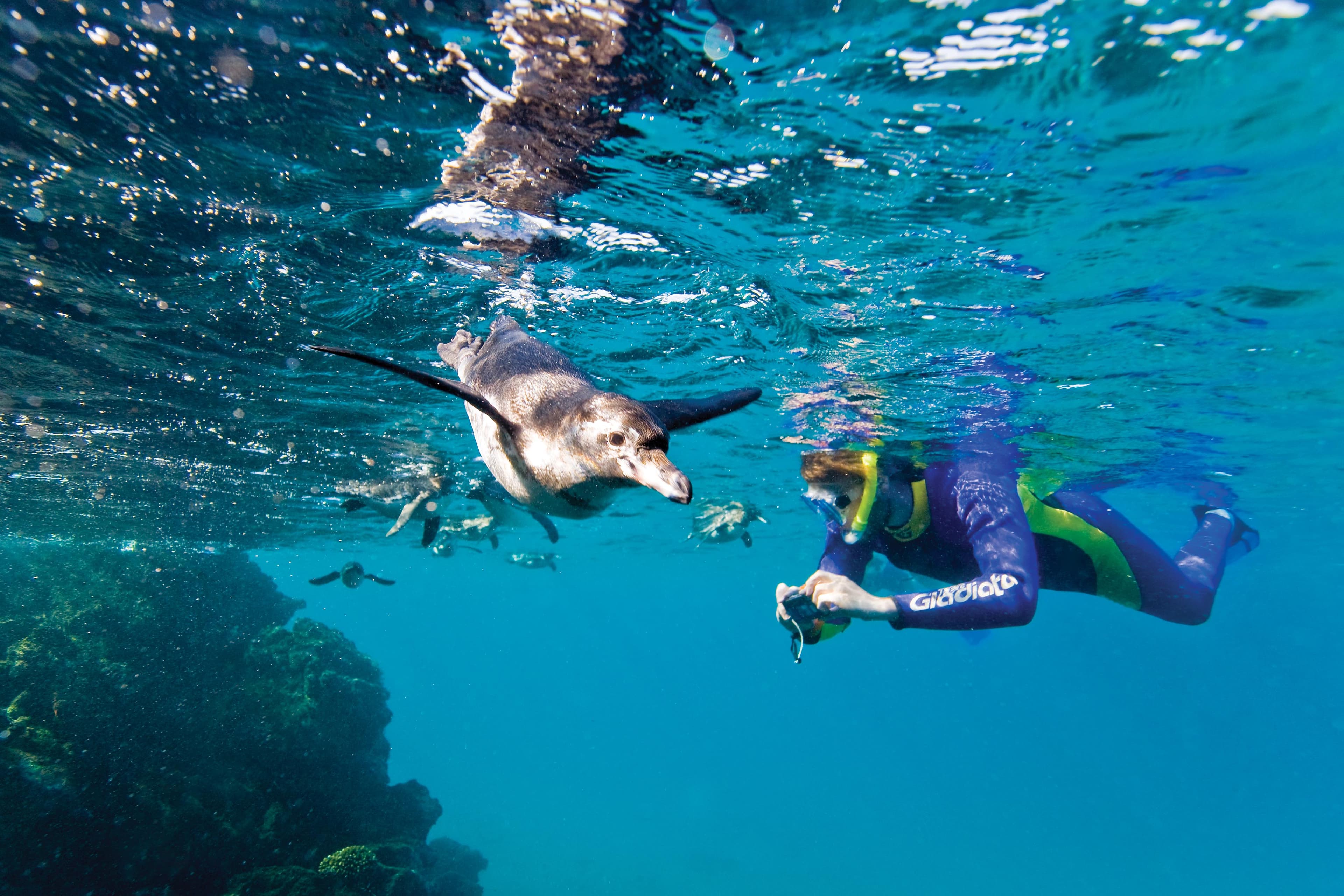
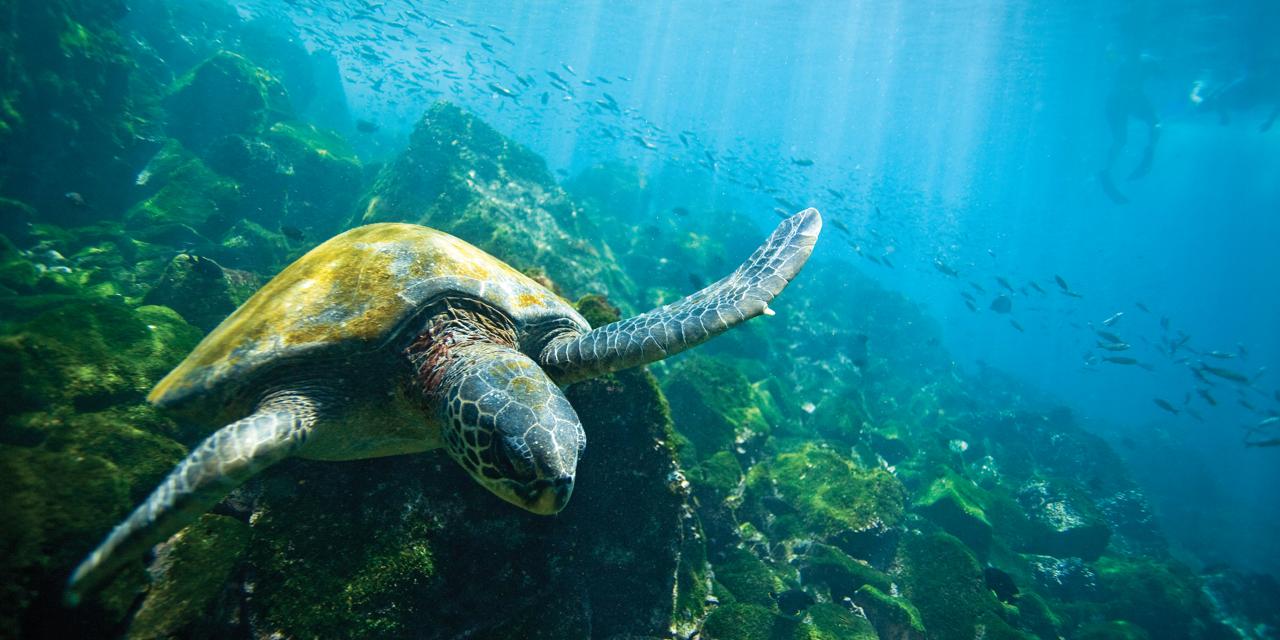
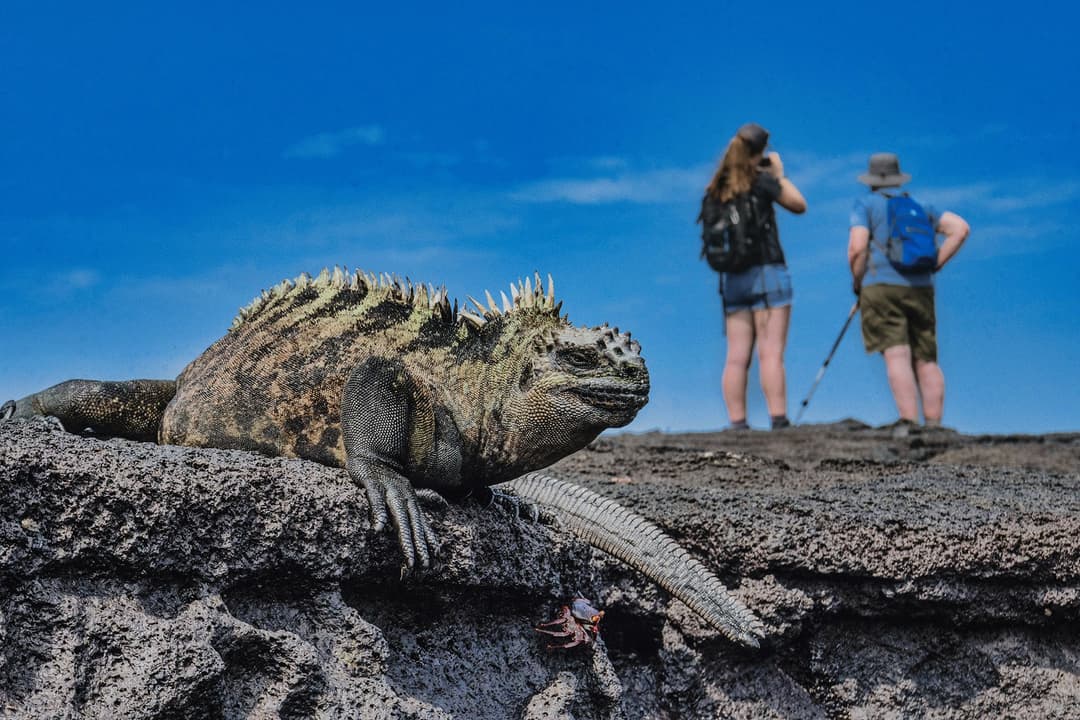
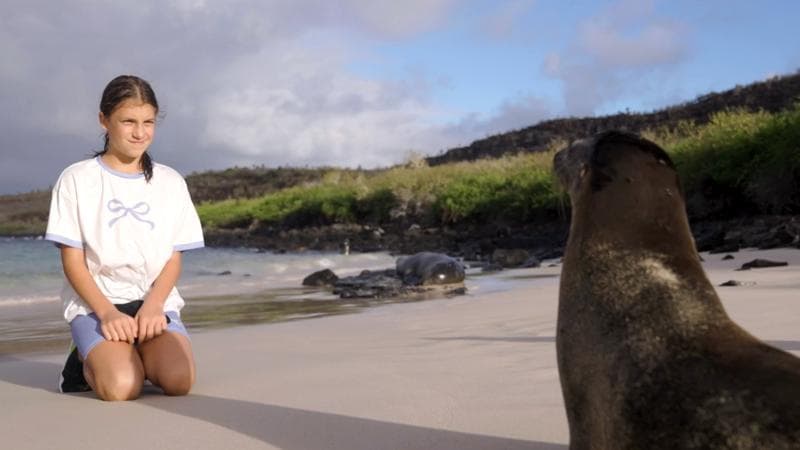
In 2022, Galápagos announced they expanded the Galápagos Marine Reserve, which means undersea animals are better protected now than ever before. This is one of the best places in the world for nesting green sea turtles, and it is a key area for their conservation as the islands also provide numerous feeding sites for this species. It's also one of few places in the world where you can swim with penguins. But that's just the tip of the iceberg. Don your snorkel or dive gear and you'll find yourself immersed in an underwater paradise that is ruled by the animals. Look for marine iguanas, spotted eagle rays, stingrays, sally lightfoot crabs, white-tipped reef sharks, hammerheads, a swath of colorful fish and of course, curious sea lions who may stop by for a closer look.
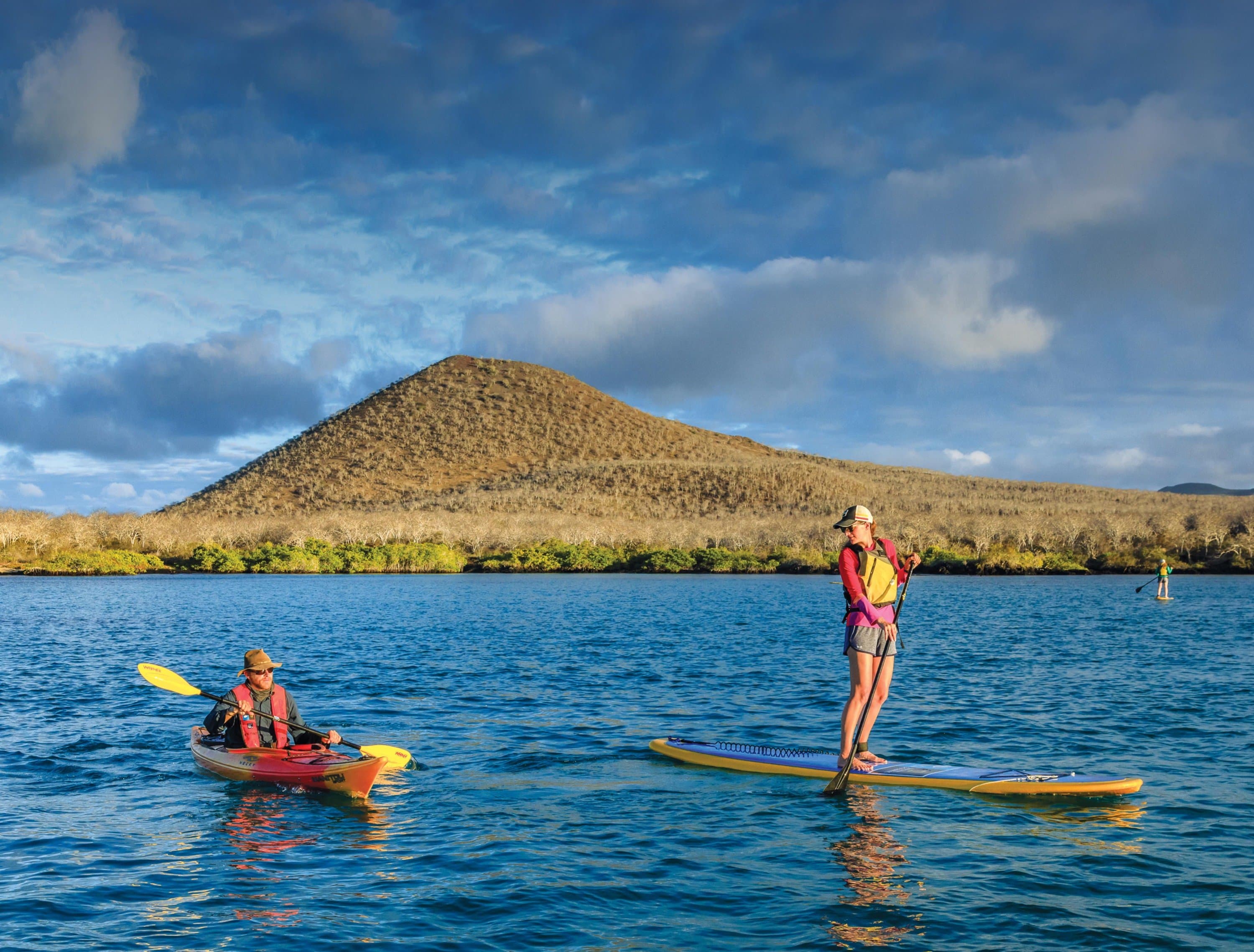
Wherever in the Galápagos you are, taking in the wildlife-rich shallows and shorelines—whether alone or with a partner in adventure—is an incredible way to get a different perspective at water level. Kayaks and stand-up paddleboards can bring you within feet of surfacing sea turtles or shark nurseries, and glass-bottom boats offer a window onto the colorful fish that swim just beneath gentle waves. Take these quiet moments to process the natural marvels you’re observing and experience what’s drawn so many explorers before you to these waters—you’re one with nature, in a natural world unlike any other.
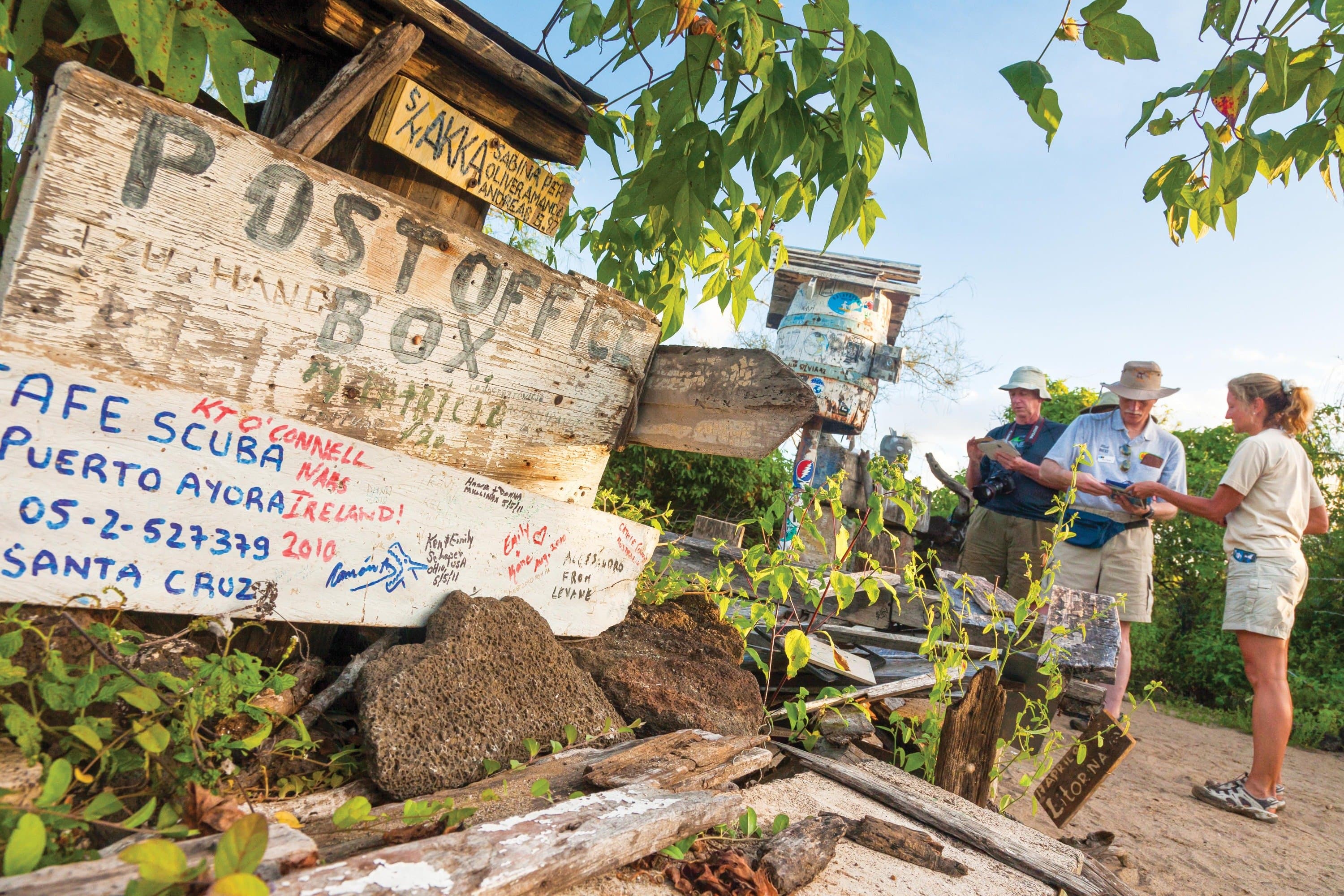
Darwin isn’t the only luminary to have brought the Galápagos into the public imagination. Pack a copy of Herman Melville’s The Encantadas in your luggage to see the islands through the eyes of the famed Moby Dick author. If you’re interested in the seedy side of Galápagos history, cruise along the red cliffs overlooking Buccaneer Cove on Santiago Island, where 17th and 18th century buccaneers hid out when they were up to no good.
If you’re more interested in what the good guys were up to during that era, Post Office Bay in Floreana is a local oddity devised in the 1700s by whalers passing through the islands to provision their ships. They devised a way to communicate with their loved ones back home, leaving letters in a barrel on Floreana and picking up whatever letters they found that matched their destination to deliver upon arrival. It could take years to deliver a letter back then, but the Galápagos Post Office Bay moves a little faster these days. Galápagos visitors still drop off postcards and letters at Post Office Bay, and other visitors take them back to the mainland for mailing. You can be the latest link in a tradition going back centuries for the cost of a single stamp!
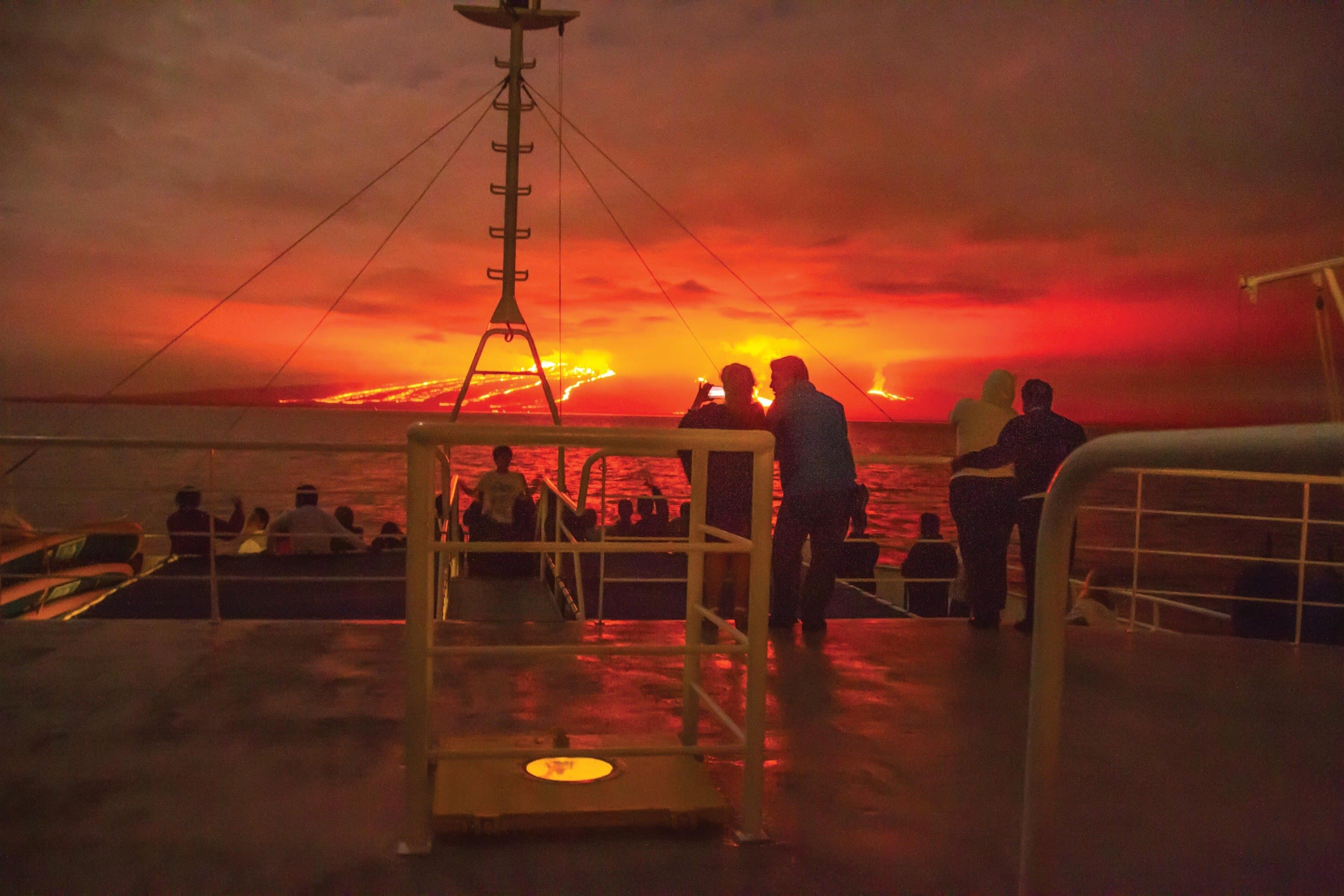
The Galápagos Islands were formed by volcanic activity, and to this day many are still active. Recent eruptions of Wolf Volcano and Sierra Negra provide an opportunity to see how lava flows ultimately created the unique landscapes of the islands. If you're lucky enough to be visiting when this occurs, you just might get a front-row view to the action—thanks to flexible schedules that allow for true exploration on a National Geographic-Lindblad Expeditions voyage, your expedition leader and captain may reroute the ship to visit the eruption from a safe distance. While exploring on land, you'll also see firsthand how oddities like lava tubes formed after previous eruptions. These tunnels, caves and craters are just part of an ever-changing landscape, creating an irresistible draw for visitors.
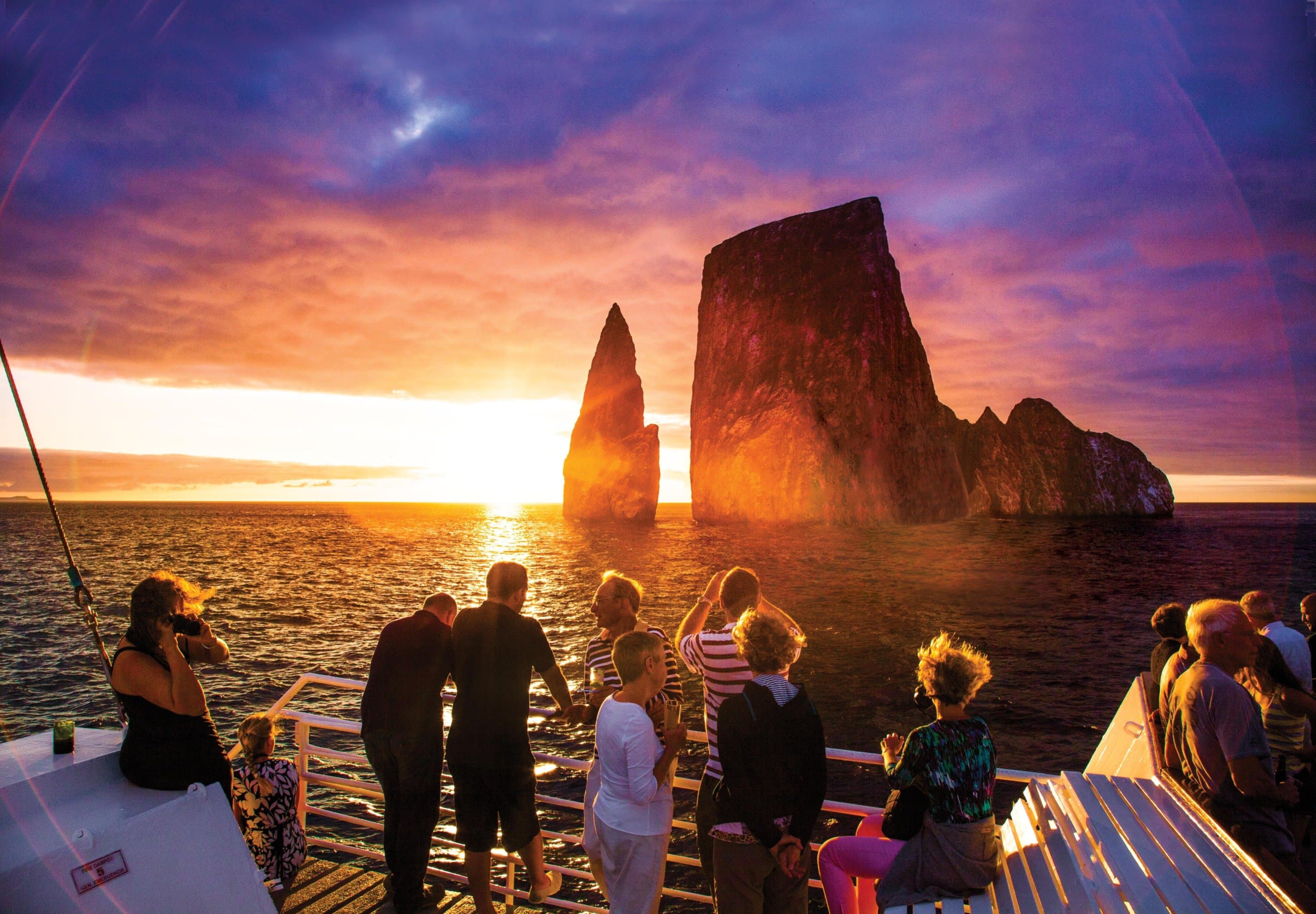
One of Galápagos’ most amazing landmarks, Kicker Rock rises straight out of the water near San Cristobal Island. Also called Leon Dormido (or "Sleeping Lion"), it’s a remnant of volcanic activity known as a tuff cone—a steep vertical formation of ash, this one rising 500 feet out of the sea. As it’s eroded into its current form, it’s become an iconic destination for photographers who love to test their skills and catch its contours in the warm pink light of the sunset. With help from a National Geographic certified photo instructor, you can be sure to capture the ideal shot with the sun's rays lining up just so with the breaks in the formation.
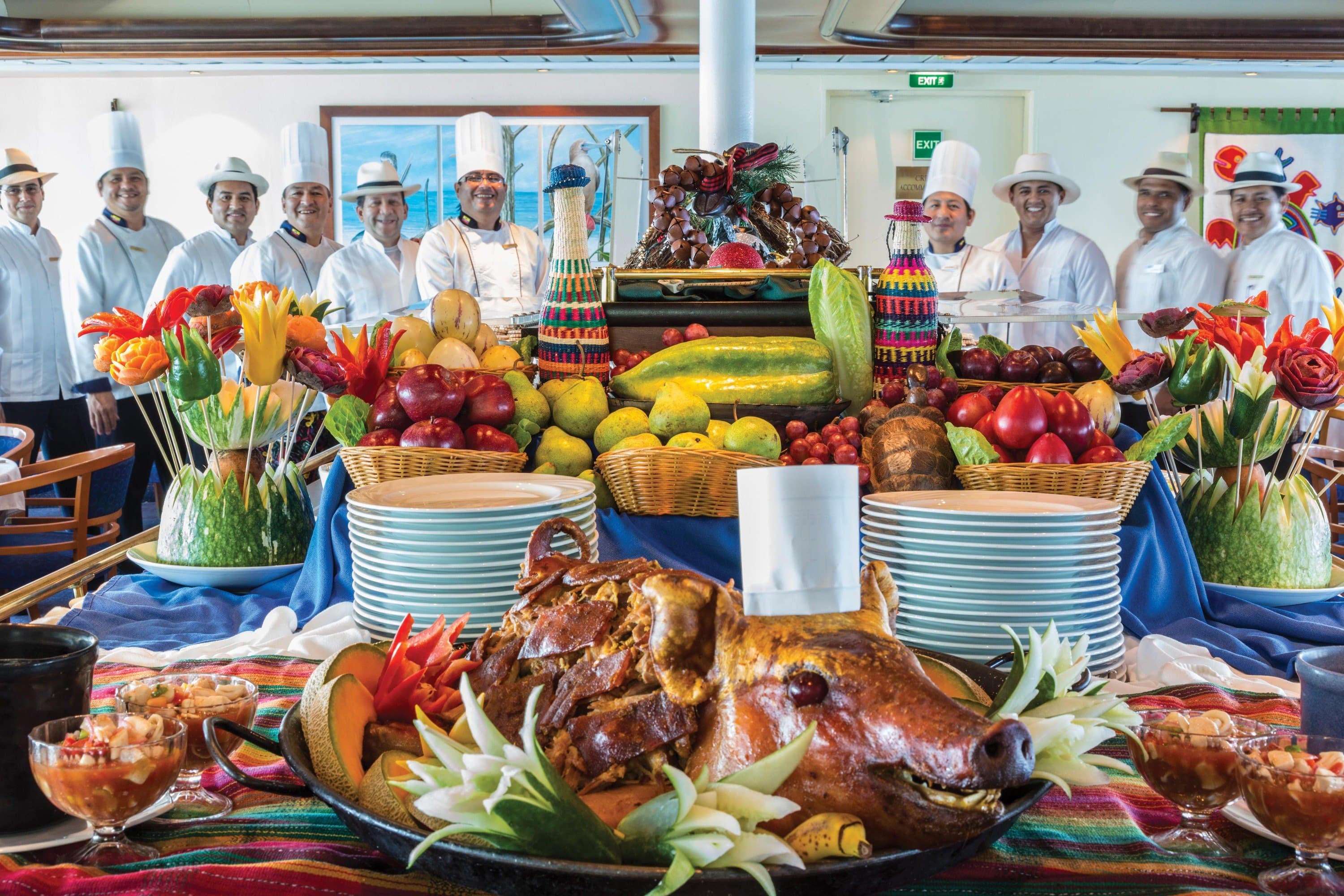
Ecuadorian cuisine along the coast and in the Galápagos is as varied as the islands themselves. In a special lunch on the ship, you might try a local suckling pig or arroz marinero, a seafood rice that’s a local favorite—all flavored with condiments and herbs grown right in the Galápagos. You’ll also get a sense of not just the local palate, but also local industry when you visit one of several local coffee plantations. Thanks to the volcanic landscapes, the soil is rich in nutrients and minerals that give their product its unique flavor and natural sweetness, a balance between sugar and chocolate with a hint of sea salt.
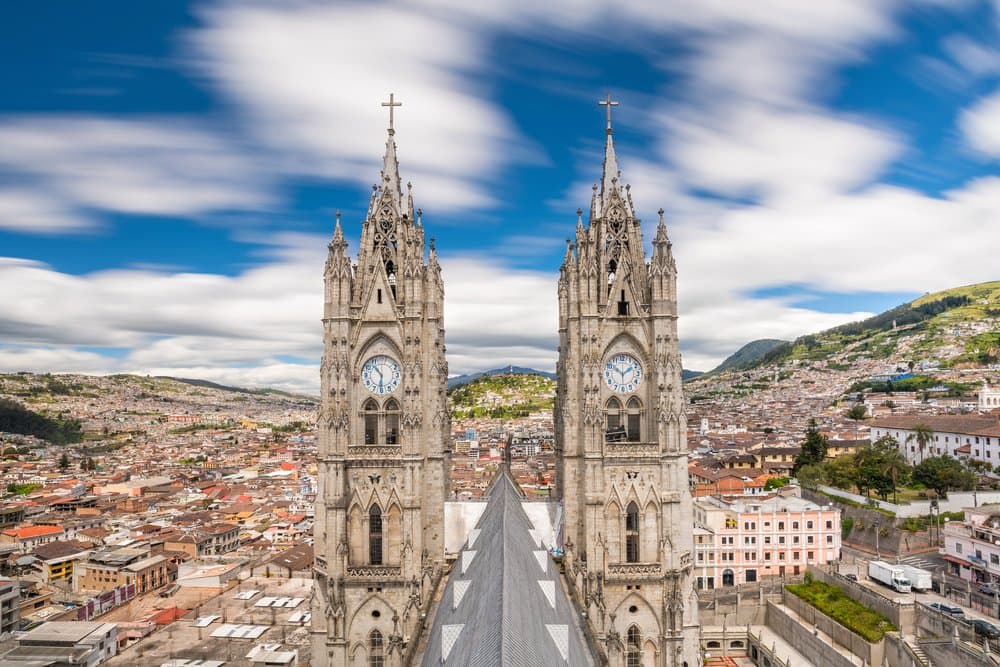
Many travelers to Galápagos will pass through Quito, giving you the chance to see more of the region and enhance your voyage to the islands. Designated a UNESCO World Heritage Site in 1979 alongside Galápagos, Quito’s 16th-century historic center is the largest and best preserved in Latin America. On a city tour, explore the plazas, Baroque churches and cobbled streets of this beautiful colonial capital.