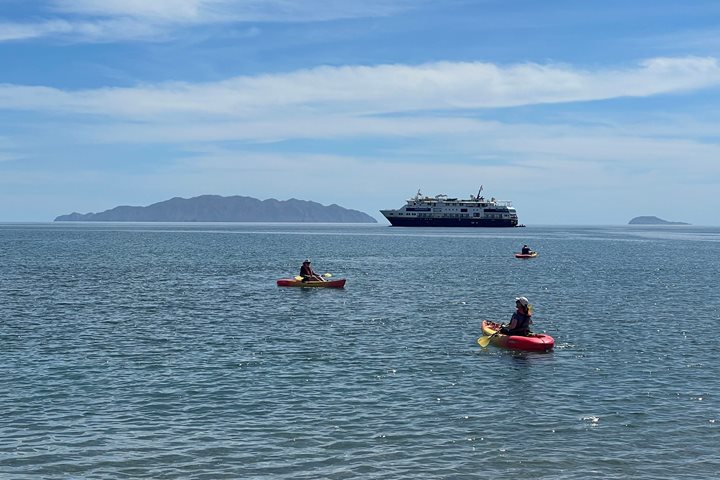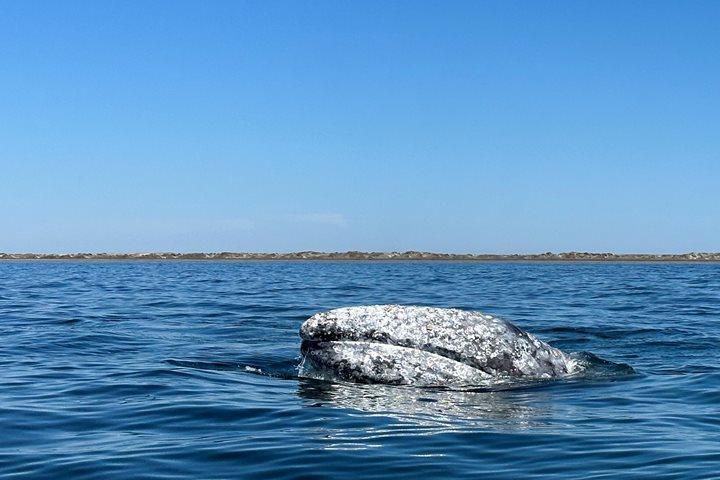
Isla Magdalena, the western boundary of Bahia Magdalena, is 60 miles long; a sinuous narrow sand island anchored by ancient rocky outcrops to the south and lined by mangroves along the canal that brought us north to Boca de Soledad; ‘the mouth of solitude.’ Most importantly for us, it is the winter home for California gray whales and their newborn calves. Magdalena Bay is a vast, shallow coastal lagoon that covers more area than San Francisco Bay, supports many migrating shorebirds and several fishing communities. The south part, Bahia Almejas, is home to the delectable chocolate clam and the pangueros from San Carlos and Pto. Lopez Mateos who make their living in various fisheries—sardines (each town has a cannery), shark (esp. mako), spiny lobster, swimming crab, and shrimp to name a few.
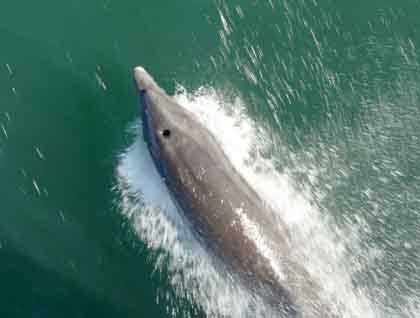
We made a swift passage north with the tide this morning, and found ourselves out in the Boca right after lunch watching whales out near the breakers that guard the entrance to this whale nursery. California gray whales are unusual in their ability to navigate the shallow water of the coastal lagoons and rarely venture more than 20 miles offshore. Theirs is the longest migration of any mammal; from their feeding grounds in the Bering and Beaufort seas, to three special lagoons here on the Pacific side of the Baja California Peninsula. Today many of the whales were out in the breakers getting their youngsters ready for that long journey north to Alaska. We all wish them well on that extraordinary migration.