- Pacific Northwest
- Canada
- North America
- Duration
- 8 Days
- Dates
- Oct
- Starting from
- $5,061 per person
Call +1.800.397.3348 or Request a Quote
Mists rising from Salish Sea waters; steep mountains cloaked in deep forests of Western red cedar, Douglas fir, and Western hemlock; rugged canyons carved out by winding waterways; grassy, sloping meadows—this is the Pacific Northwest. And within the incredible diversity of habitats here, from the marine environment to high desert, a variety of birdlife can be found thriving. In fact, the states of Oregon and Washington boast the 7th and 10th longest bird lists, respectively, of any state in the U.S., while British Columbia features the most avian diversity of any Canadian province, with some 560 species on record.
On our two itineraries in the region, Exploring British Columbia and the San Juan Islands and theColumbia and Snake Rivers Journey, guests have the opportunity to spot (and hear) an array of intriguing species such as the theatrically plumed harlequin duck, the loud, bold-crested Steller’s jay, and the diminutive Pacific wren, the smallest of all North American wrens. Here are some other notable birds of the Pacific Northwest to watch out for.
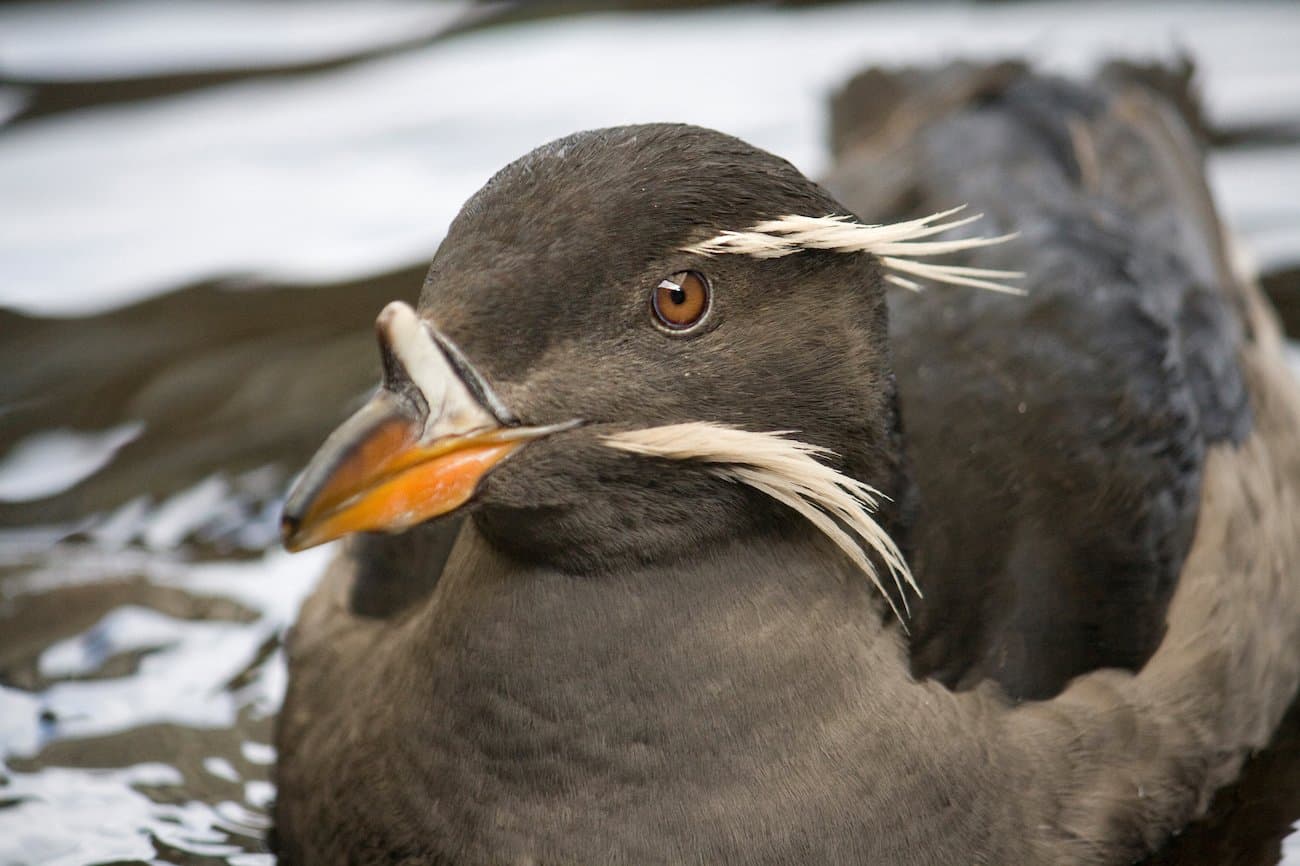
The rhino auklet is a bird of nearshore currents and upwellings in the Salish Sea and Puget Sound. Globally, this species ranges up the Pacific coast of the United States through Alaska, across the Bering Strait to Russian waters with wintering populations in Japan. A true North Pacific seabird, it is considered the “fourth puffin” after horned, tufted and Atlantic puffins. Indeed, the auklet is sometimes called the horn-bill puffin and shares similar morphological features like stiff tongues which allow these birds to hold multiple fish in their beaks at once. Chunky in appearance with whirring wings, many observers refer to this auklet as a “flying football” as it bombs along the surface of inshore waters.
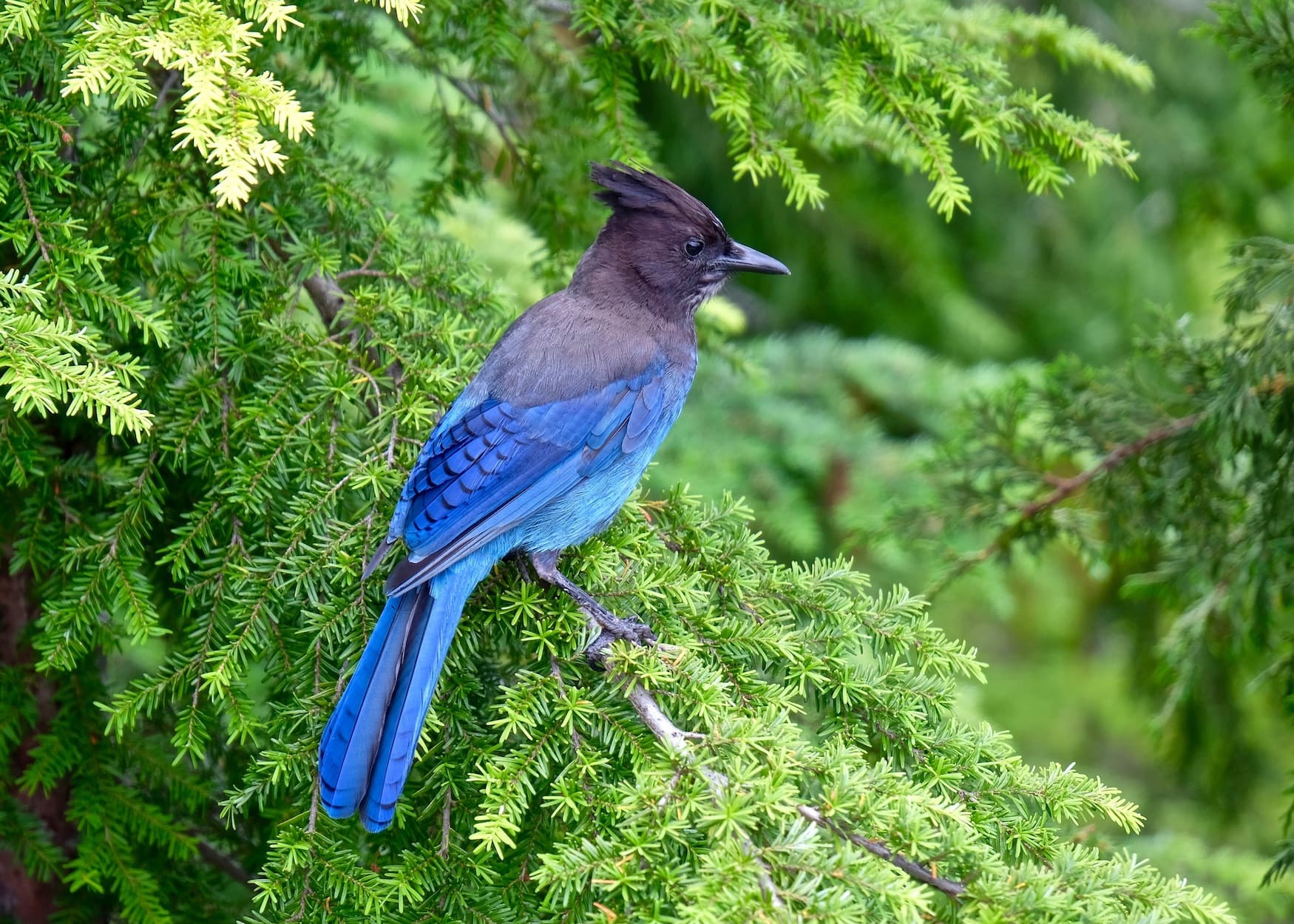
Uttering its rattling “kek-kek-kek” call, finely dressed in blue and black, with an extended crest on its head, the Steller’s jay seems to seek out attention. Named for German naturalist Georg Wilhelm Steller, who also gave his name to a species of sea lion, sea-eagle, and an extinct sea-cow, this member of the Corvidae family is frequently encountered at all levels of the forest, from the highest canopy down to the ground where it can be spotted hopping through the leaf litter omnivorously foraging for seeds, grubs, and insects. Watch for the jay with its distinctive and deliberate flap-and-glide flight as the bird crosses a moist glade to adjacent conifer and mixed forests.
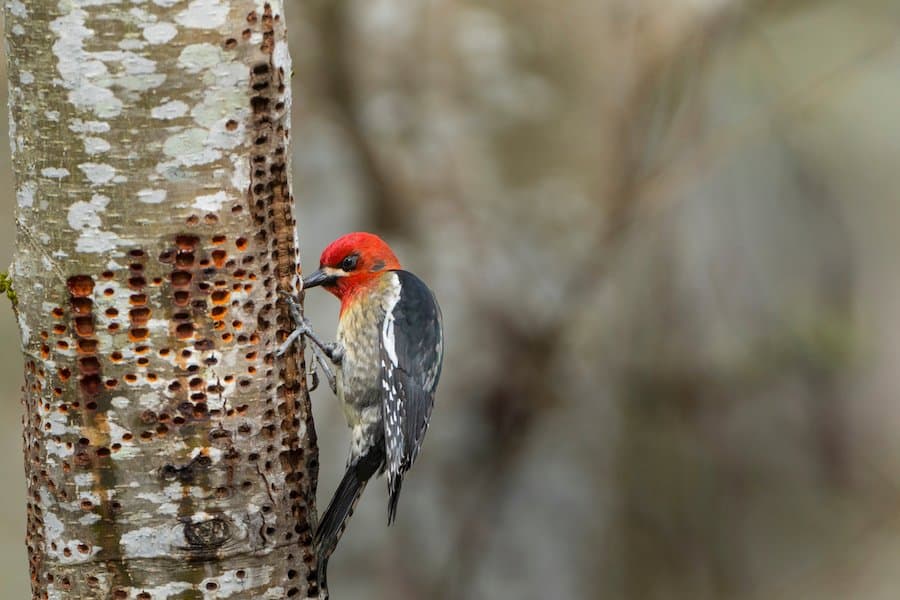
The sapsucker is one of 12 species of woodpecker gracing the forests of the Pacific Northwest of the United States and the Pacific Southwest of Canada. The American west’s own version of the familiar eastern yellow-bellied sapsucker, the red-breasted sapsucker employs similar feeding methodology in drilling evenly spaced rows of holes or “wells” in sap-bearing tree trunks. Easily spotted by its vibrantly vermillion head and chest, this species returns to these locations frequently where it acts a handyman, maintaining the feeding sources as well as feasting on sweet sap and the insects similarly attracted to it. In autumn, sapsucker populations increase in the lowlands supplemented by individuals that have nested at higher elevations.
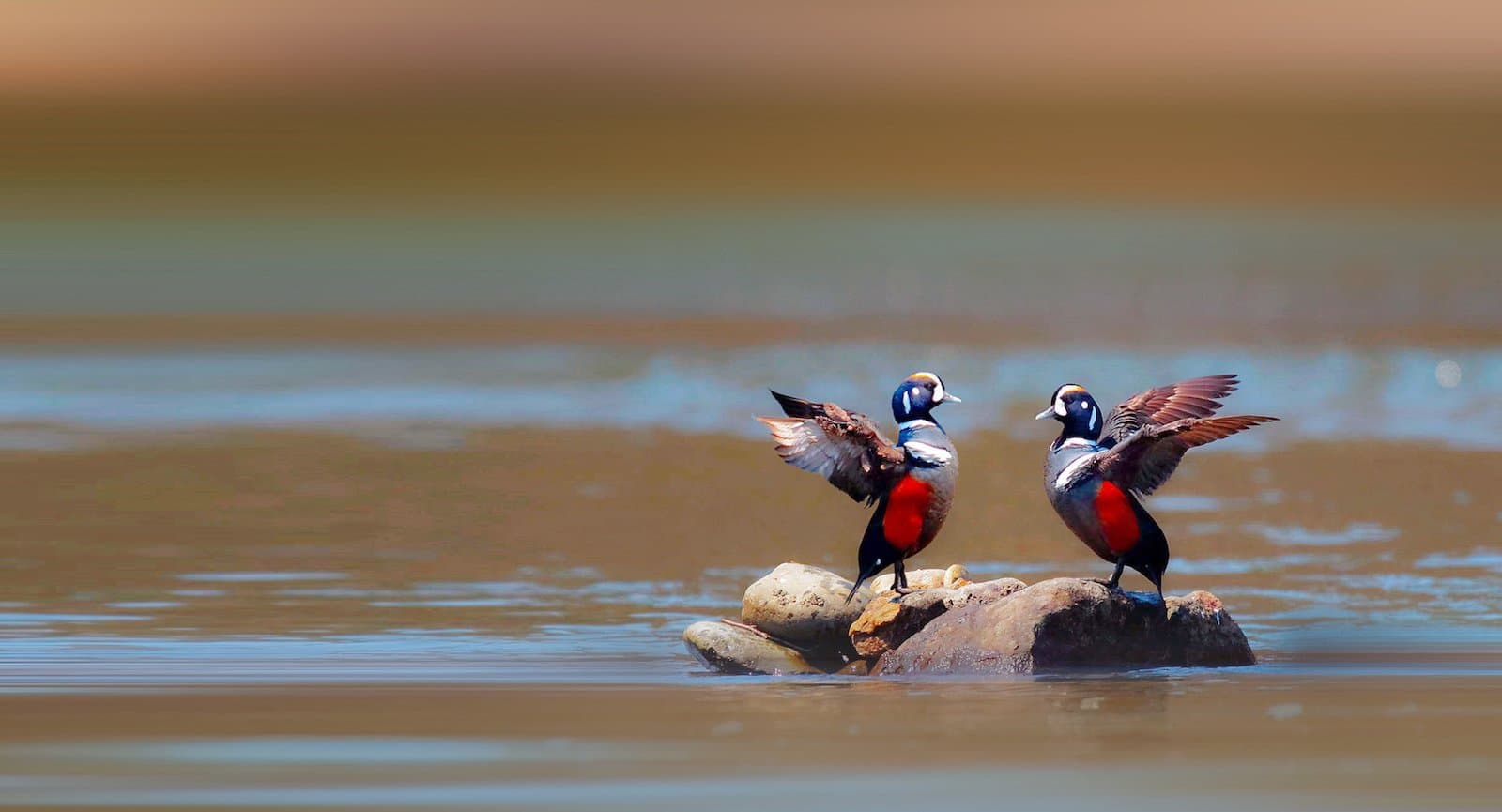
Males appearing almost clown-like in their multi-colored, multi-patterned array, the aptly named harlequin duck, can be located during most months in the San Juan Islands. This dapper duck nests in high-elevation creeks and streams of the Olympics, Cascades, and into the northern Rocky Mountains before dispersing to the coast after breeding. Surprisingly camouflaged as it forages in sea foam and dark water, the harlequin frequents similar turbulent waters in coastal areas as it does on the fast flowing streams of inland mountains. Look for this photogenic species amidst the signature riptides and currents of the Salish Sea.
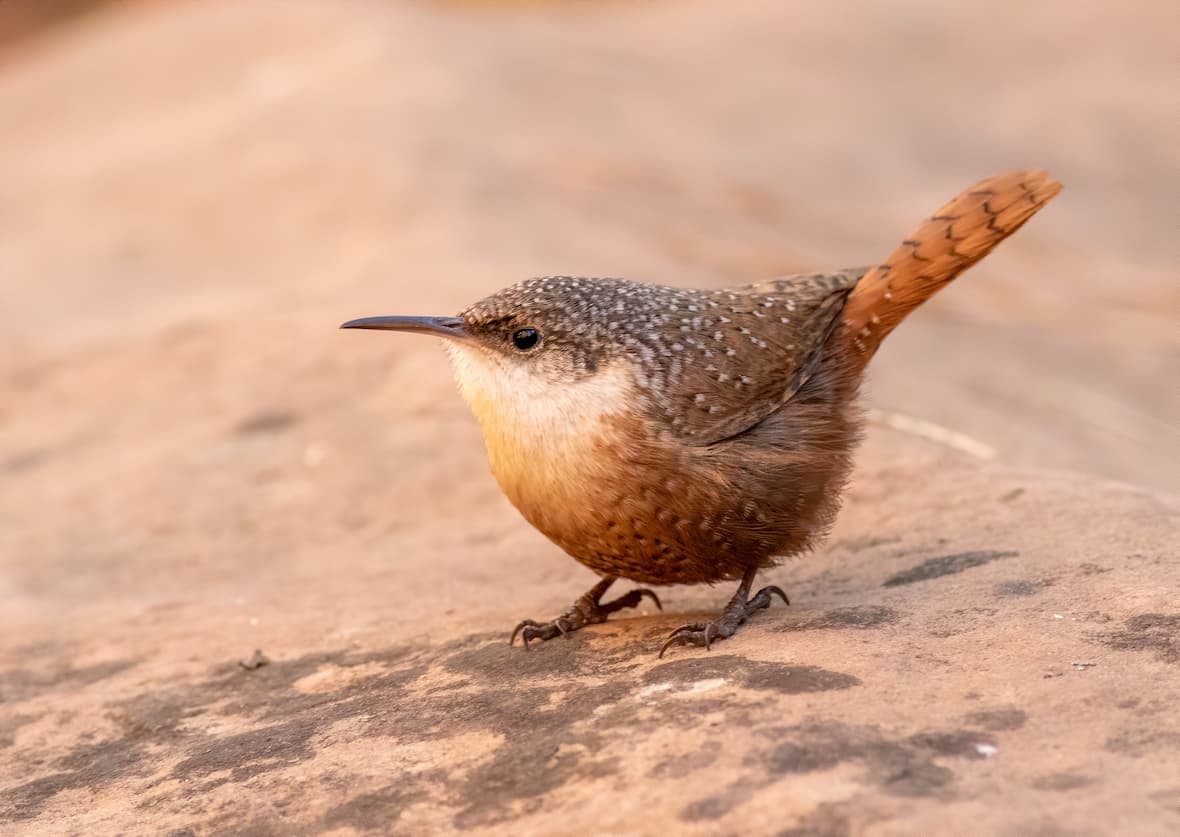
From scree slopes along the Columbia River to the rimrock of the Lyons Ferry area of Eastern Washington, the cascading song of the canyon wren can be heard in early spring into the fall. With careful searching and perhaps some audio triangulation, we can usually find the source: a tiny, bronzy bird with a white bib belting out its tune from the top of a rocky outcrop. The species, a permanent resident of the dry sides of both Oregon and Washington states, has adapted a flat skull, which in combination with its fairly long bill, allows the wren to search for prey in small spaces within the rocks. This wren has never been observed drinking water so it is speculated that its daily needs are acquired through the insect prey it hunts.
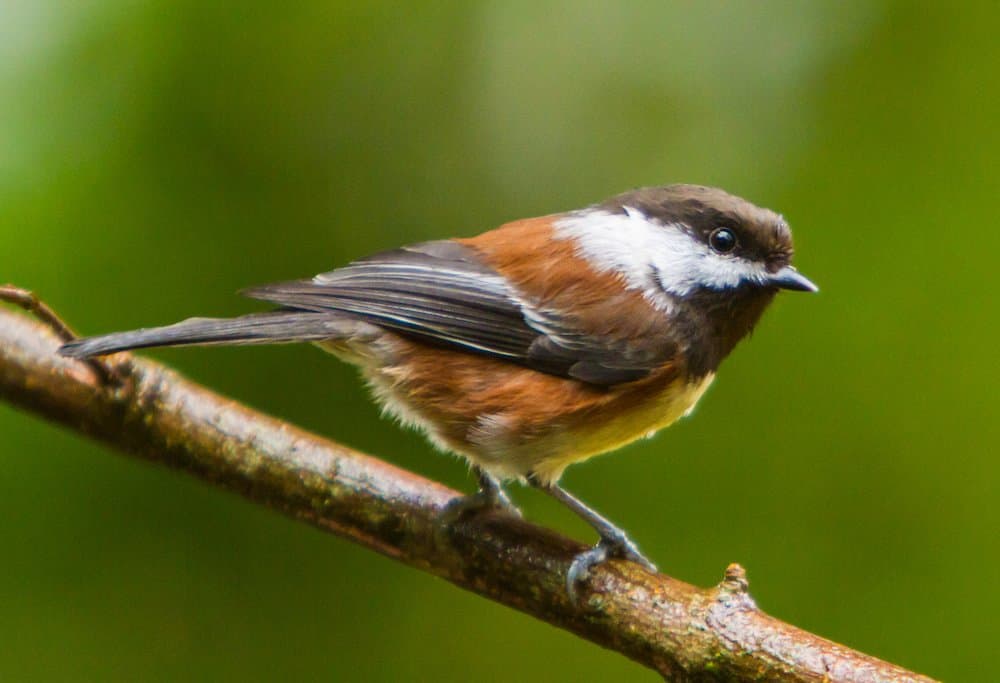
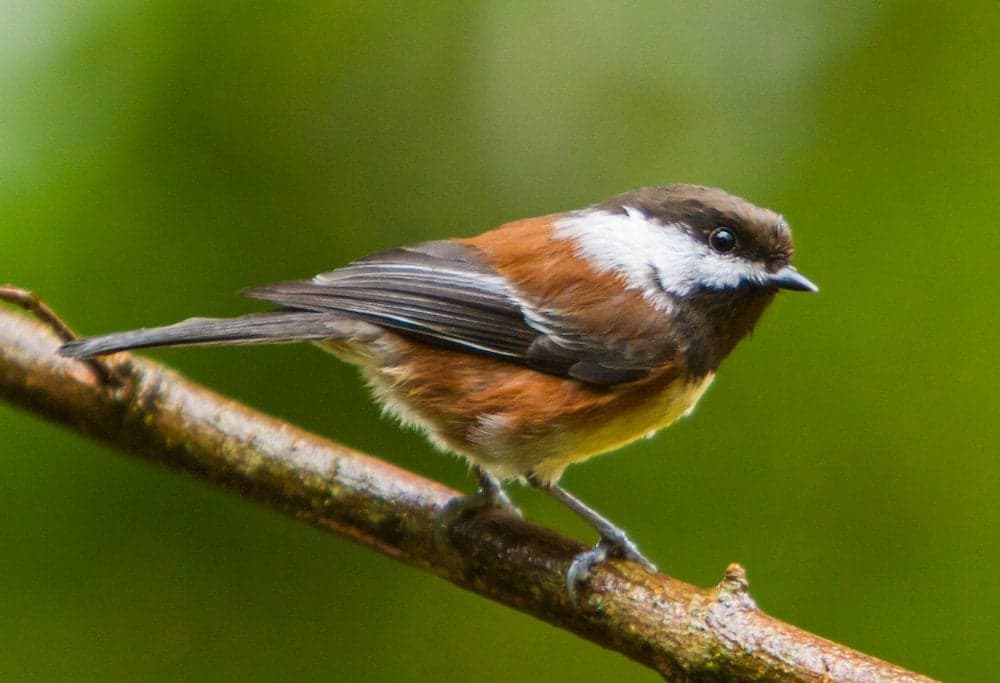
Dapper and handsome, this tiny sprite is neatly clothed with flanks and back draped in a rich, warm chestnut hue. It’s a bundle of energy as it careens through the forest in a mixed flock often consisting of two species of kinglets, nuthatches, brown creepers and other chickadee species (there are four total in the Pacific Northwest). These roving bands of tiny songbirds seem to have an energy all their own and it takes some concentration and close study of the flock’s movements to pick the chestnut-back out of the group.
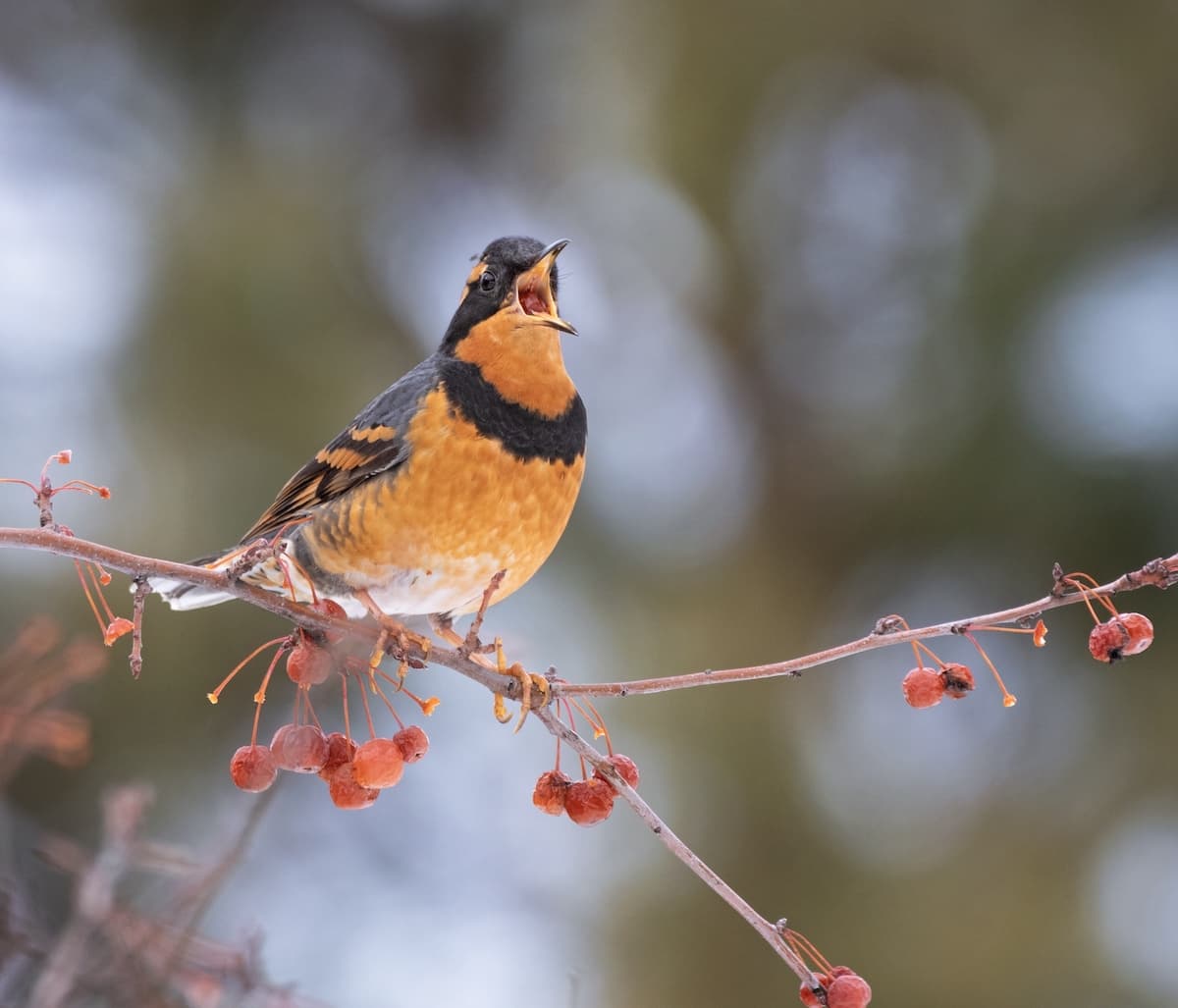
From somewhere within the forest, the varied thrush emits its haunting call, an enchanting intersection of a hum and a whistle and a beloved sound of coniferous habitats of the Pacific coast of North America. Fortunately, the thrush often continues singing well into the autumn giving guests on expedition a chance to listen in wild stillness as this strange, beautiful sound cuts through a misty morning. The eminent naturalist Louis Agazziz Fuertes described it as “perfectly the voice of the cool, dark peaceful solitude which the bird chooses for its home.” Locating the varied thrush in your binocular field of view is as rewarding as hearing its song. Similar to the familiar American robin in appearance and coloration, the varied thrush is more decked out with its conspicuous upper breast band and patterned wings.
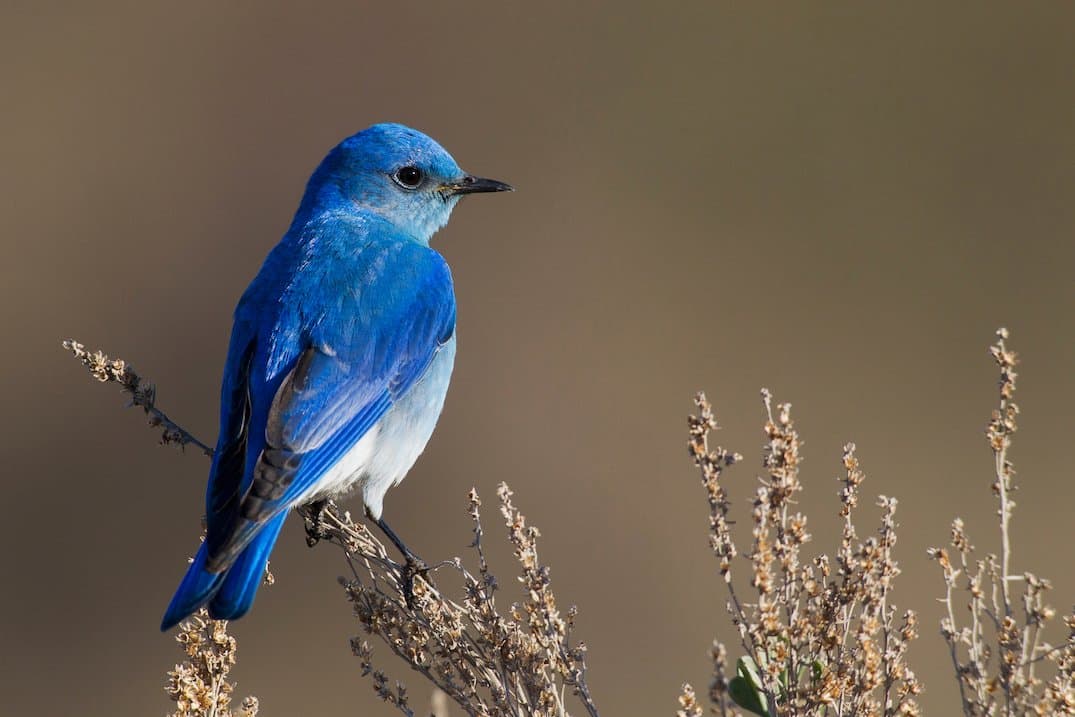
While traveling in Eastern Oregon and Eastern Washington, if you spot a flash of deep sky-blue in the air, it may mean that the dazzling mountain bluebird is present. This small migratory thrush can often be seen flycatching from a bare branch in open sage country or also found in open forests of the Cascade Mountains where it nests in tree cavities excavated by woodpeckers. This species returns to its nesting grounds early to compete for the best nest sites. With the proliferation of bluebird boxes along the so-called bluebird trails, the mountain bluebird has come a bit lower down in elevation to now nest in more open country and it is always a delight to spot one on expedition.
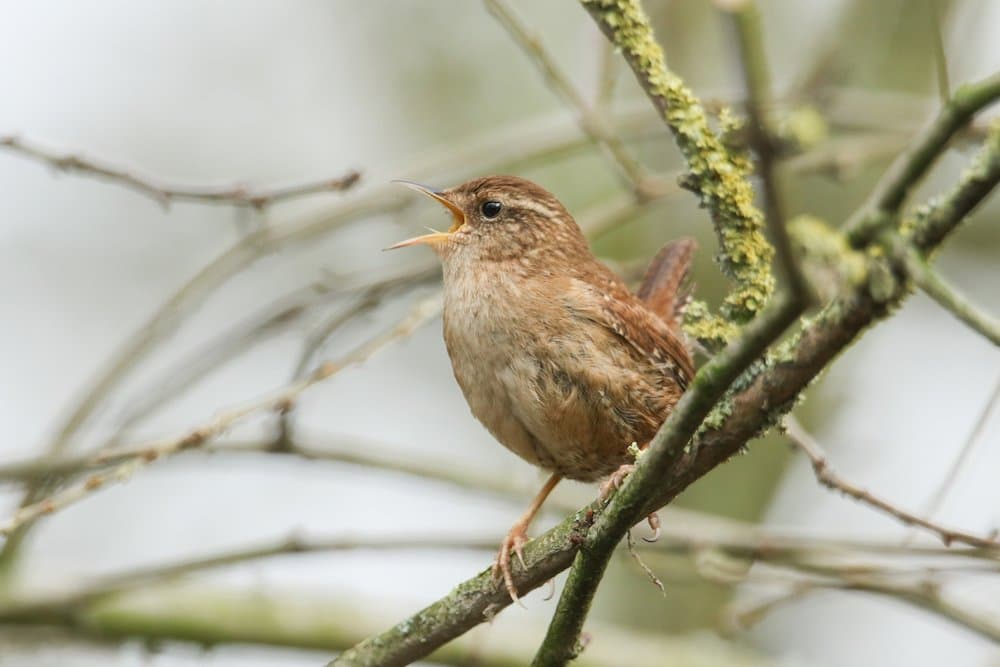
A dark, forest denizen, emerging at times in edge habitats, the tiny, ball-like Pacific wren is the smallest of the North American wrens. Little but loud and typically heard more often than seen, the Pacific wren rolls out its long, bubbling song, an archetypal sound of the thick salal patches of Washington and British Columbia forests. Just when you think it may reach its conclusion, the wren persists in belting it out and the notes cascade into another bubbling, cacophonous stream of song.
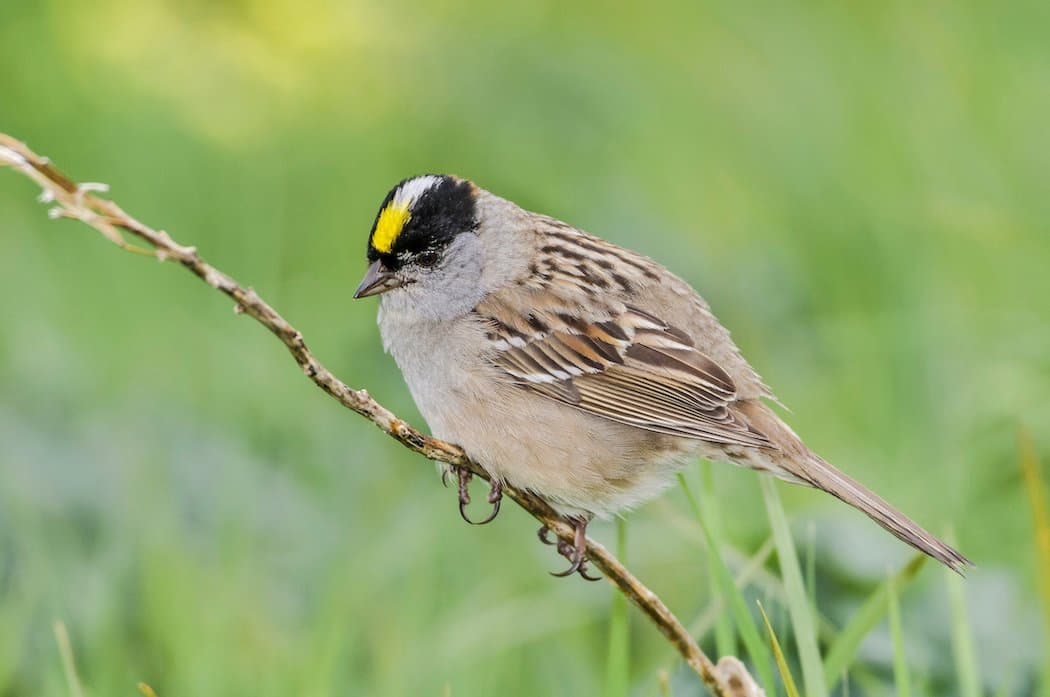
One of four types of sparrows of the genus, Zonotrichia, the golden-crowned sparrow is the only species whose range is confined to North America’s Pacific coast. A common nester in Alaska and coastal British Columbia, gold miners and explorers bestowed the sparrow with the moniker “Weary Willie," describing its languid song, with a somewhat half-hearted last note. Some speculate that the miners may have appropriated their state of constant exhaustion to the song of the golden-crown. In September, this species has begun making its way towards the southern end of its range where it overwinters, often in large flocks with its three cousins of the same genus.
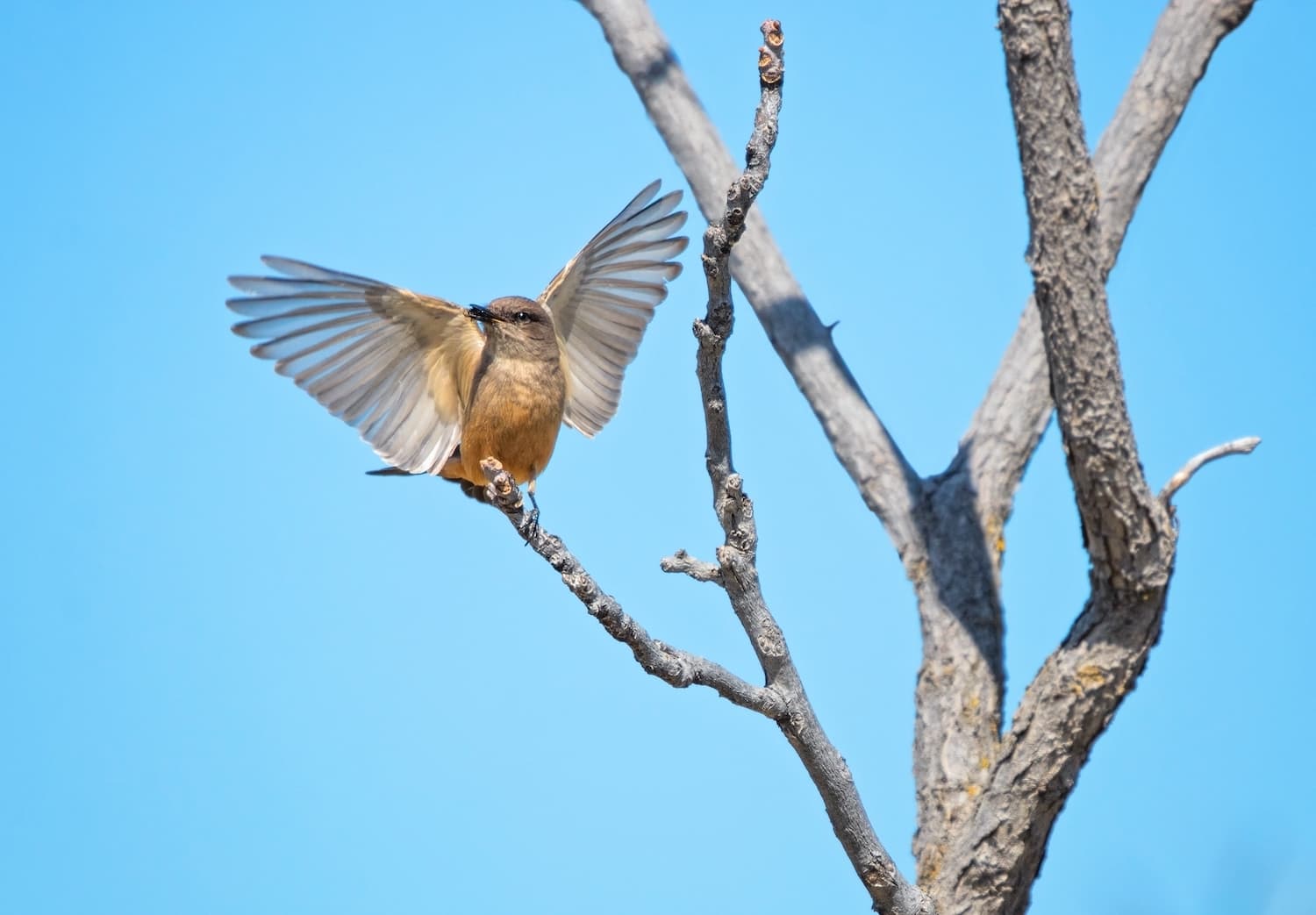
By March, the Say’s phoebe, a member of the large flycatcher family, has returned to its nesting territory of Eastern Washington and Eastern Oregon. In a variety of open country habitats, it can be quite conspicuous perched and habitually pumping its tail on fence posts in ranch land and in the open sage plains of the desert. But it's on our Columbia and Snake River Journey where guests can fairly readily spot the phoebe, named for American naturalist Thomas Say, with its rufous-red belly and warm tan and brown upperparts.