


Up to $2,000 Air Credit
- Iceland
- Greenland
- Arctic
- Europe
- Duration
- 8 Days
- Dates
- Jun, Jul
- Starting from
- $7,400 per person
Call +1.800.397.3348 or Request a Quote
Few places reward experience like the Arctic. For over half a century, National Geographic-Lindblad Expeditions has explored this dynamic world of shifting sea ice and rugged fjords, drawing on deep expertise to navigate some of the world’s most remote waterways. Aboard an ice-class expedition ship purpose-built for polar waters, veteran captains and an experienced expedition team guide each Arctic expedition cruise.
Decades of polar expeditions around and beyond the Arctic Circle—from Iceland and Greenland to the Canadian Arctic and the Northwest Passage—have fostered local relationships that unlock extraordinary wildlife encounters and meaningful connections with Indigenous and coastal communities. Make rare shore landings and explore beyond the ship by Zodiac, kayak and on foot; discover the hidden world beneath the pack ice through the lens of a dedicated undersea specialist; and capture the Arctic’s luminous landscapes and legendary wildlife—from polar bears and musk oxen to walruses and the elusive narwhal—with help from expert spotters and a National Geographic Photographer on every departure.
“These Lindblad Expeditions ships may be my favorite all-around picks for an Arctic cruise.”


Showing 3 ships
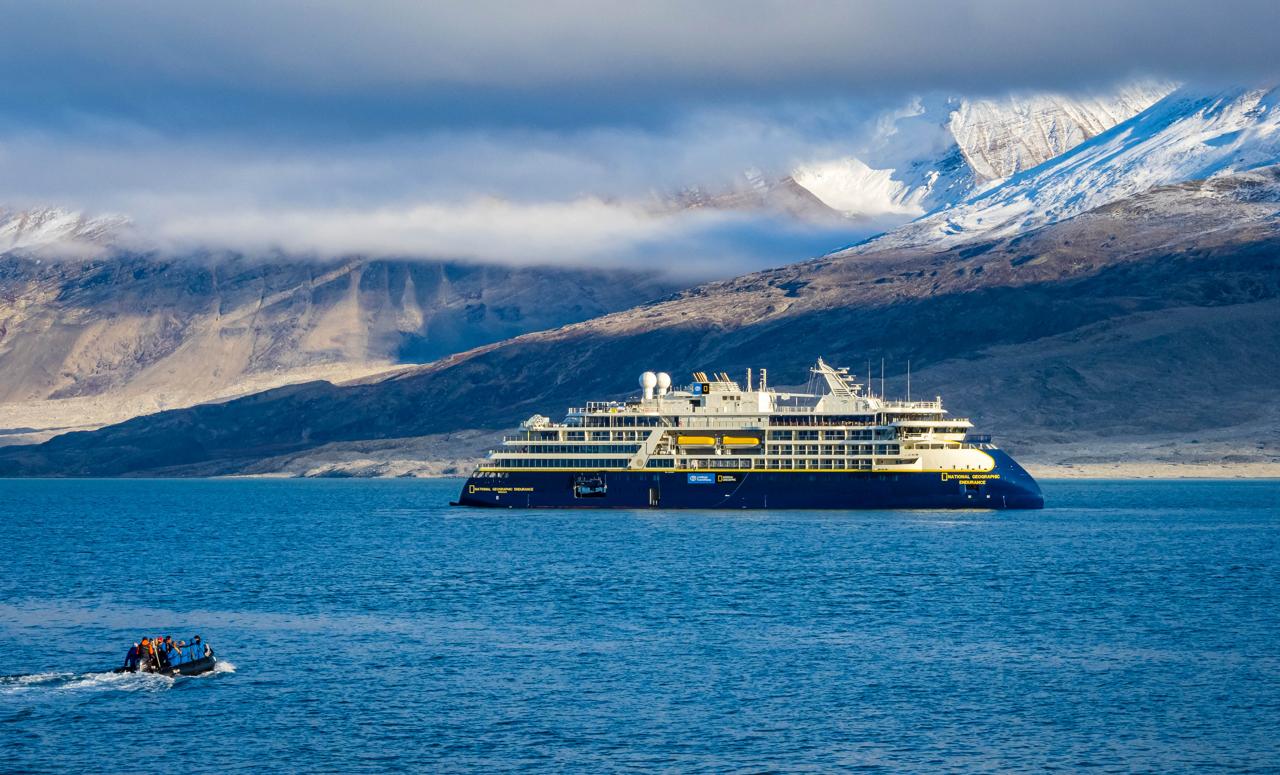
GUESTS 138
CABINS 76
DECKS 6
The most advanced ice-class expedition ship afloat, offering unprecedented access to polar regions.
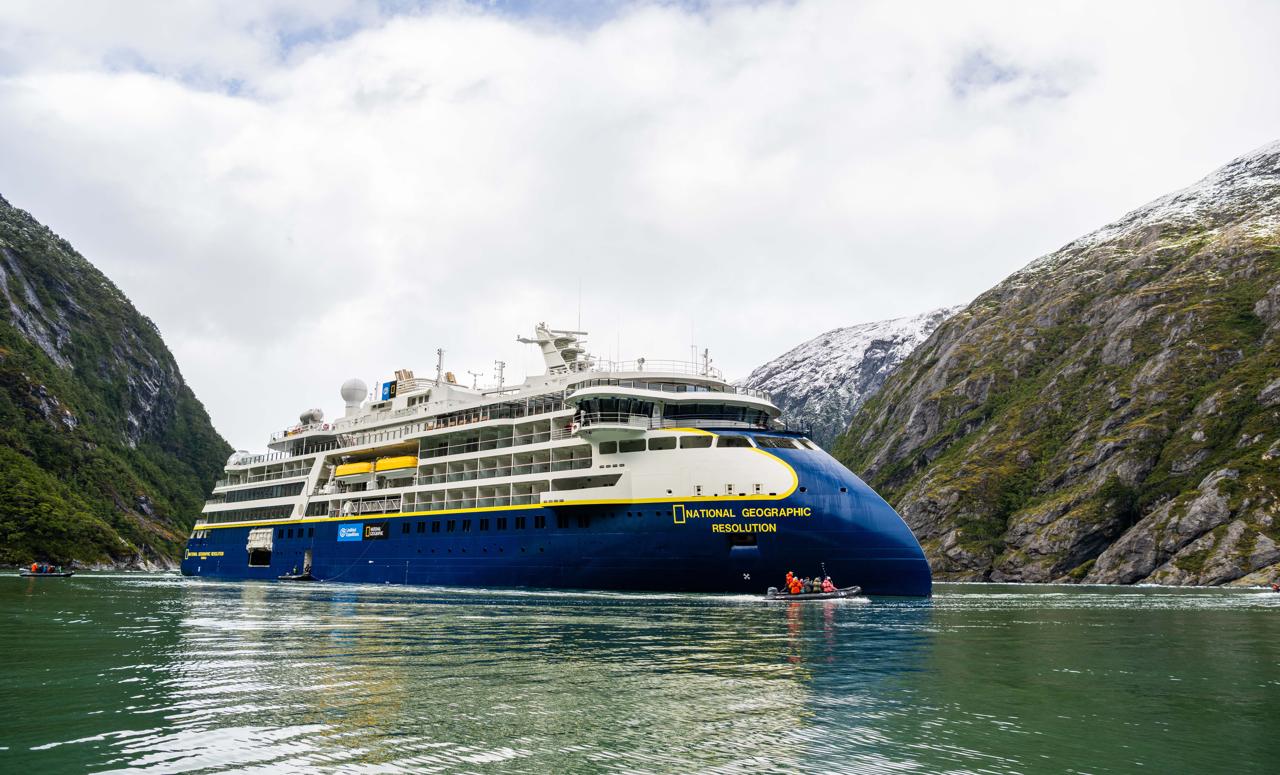
GUESTS 138
CABINS 76
DECKS 6
The second of two new polar builds, the National Geographic Resolution is named to honor the second voyage of the legendary Captain James Cook.
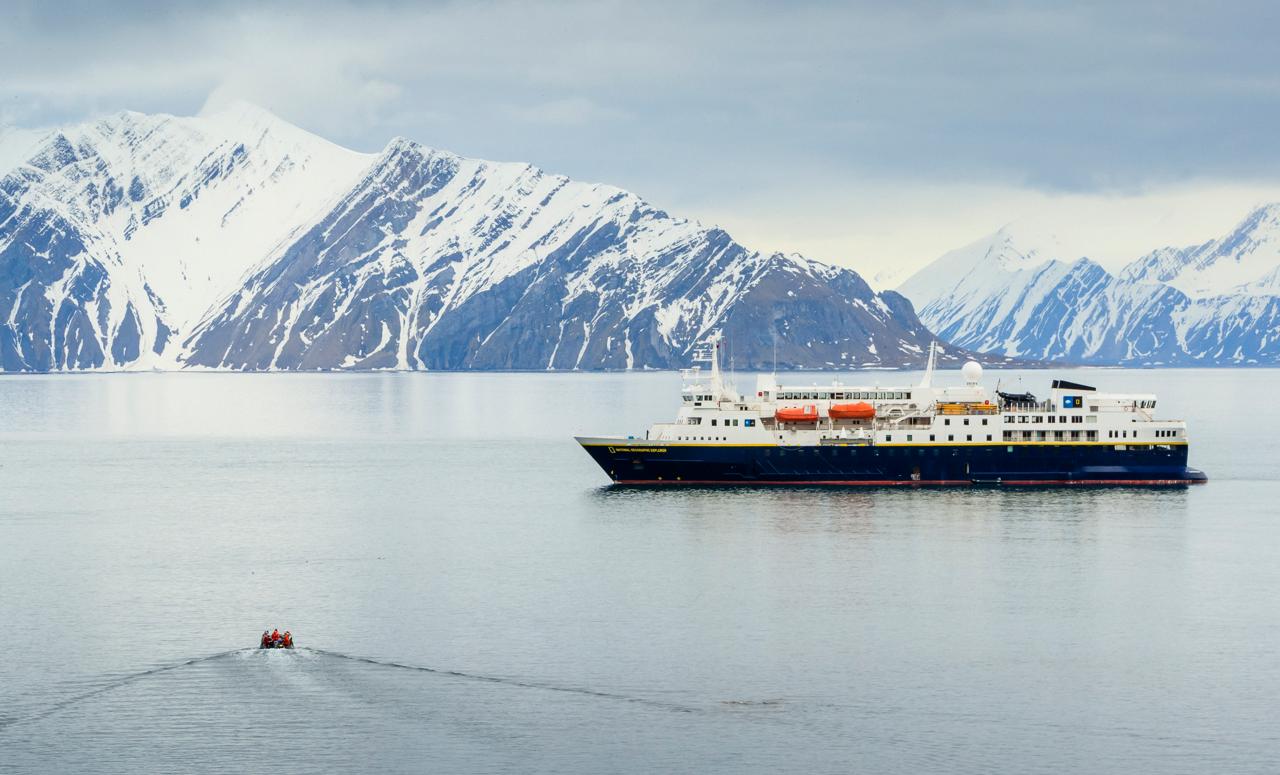
GUESTS 148
CABINS 81
DECKS 6
An authentic expedition ship, purpose-engineered for blue water and polar exploration.
Every member of the expedition team—from your naturalists and photographers to your expedition leaders—is committed to ensuring you have an unforgettable experience. Many are veteran polar guides who have exclusively worked with National Geographic-Lindblad Expeditions for decades, chosen for their extensive knowledge of subjects like geology, wildlife biology, art and climate science, while special guests offer new layers of insight into your northerly surroundings. Exploring in small groups, you’ll hear different perspectives each day of your voyage, and because there are no assigned groups, you can gravitate toward the experts who share your interests and inspire your curiosity.
Your knowledgeable and passionate expedition team is complemented by a dedicated hotel team that strives to ensure your time on board is as comfortable and rewarding as your time on shore.


Arctic cruises with National Geographic-Lindblad Expeditions draw on decades of expertise navigating shifting sea ice and remote waterways. Aboard a purpose-built expedition ship, you’ll reach seldom-seen shores; explore by Zodiac, kayak and on foot; and seek out legendary wildlife alongside expert spotters. Discover some of the highlights from our Arctic voyages.
Scroll to learn more.
Explore Disko Bay, where icebergs calved from Sermeq Kujalleq—one of the world’s most active glaciers—drift out from the UNESCO World Heritage-designated Ilulissat Icefjord. Hike through the Sermermiut Valley, cruise among towering icebergs aboard local boats and discover the remote shores and striking geology of Disko Island.
Venture into Baffin Island’s vast network of icy bays, inlets and fjords, where sheer coastal cliffs rise above lively seabird colonies and ancient cultural sites. Visit Qikiqtarjuaq—one of the most remote communities on Baffin Island—and search for polar bears, walruses, whales and the elusive narwhal as you sail, with opportunities to explore by Zodiac, kayak and on foot.
Heimaey Island—the largest of the Westman Islands—bears the enduring legacy of its dramatic 1973 eruption. See its striking black-sand beaches, hike to the rim of Eldfell crater as pockets of steam rise from the earth and visit the "Pompeii of the North," where ash-preserved homes have been carefully excavated.
Explore the remarkable landscapes of Northeast Greenland National Park—the largest national park on Earth—where dramatic fjords, glaciers and iceberg-strewn waterways stretch across one of the Arctic’s wildest regions. When ice conditions allow, navigate Scoresbysund, the world’s largest and longest fjord system, watching for polar bears, seals and whales beneath the late-summer sky.
When conditions permit, set foot on rarely visited Jan Mayen, an isolated volcanic island rising from the Arctic Ocean. Walk along black-sand beaches beneath rugged slopes, discover a landscape shaped by powerful geologic forces and learn about the people who once made their lives in this remote Arctic outpost.
Embark in Longyearbyen for expeditions into the Svalbard archipelago. Search for polar bears amid Svalbard’s ice-choked straits, with expert spotters drawing on more than 50 years of expedition heritage in the archipelago. Cruise by Zodiac beneath bustling seabird cliffs, kayak along the icy coast and hike the tundra, watching for walruses, reindeer and elusive Arctic foxes.
Explore the remote Westfjords region and visit Vigur Island, where thousands of eider ducks return each summer to nest. Meet local farmers who continue the centuries-old tradition of sustainably harvesting the birds' naturally shed eiderdown after the nesting season.
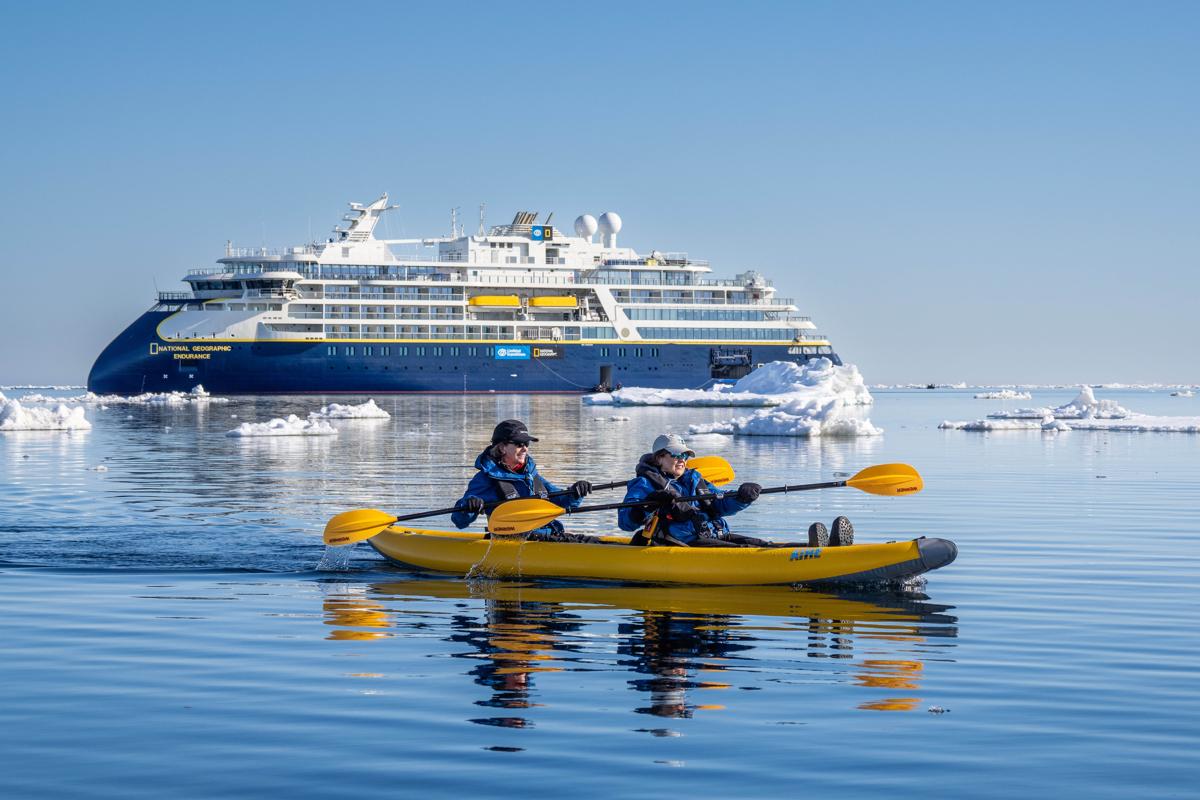


Arctic expedition cruises sail from April through September, when changing sea ice, wildlife activity and light create a distinct experience at every stage of the season—from lingering spring ice to the midnight sun and early autumn auroras. The best time to visit depends on what you’d most like to experience.
Discover what each season brings—hover over the images below to learn more.

Arctic summer begins as lingering sea ice creates prime conditions for spotting polar bears, while seabirds return under 24-hour daylight.

Retreating sea ice makes remote itineraries—including Northwest Passage transits—possible. Whales feed and wildflowers color the tundra.

As true night returns, watch for the northern lights over Greenland’s fjords while autumn color sweeps across the tundra.
Exploring Greenland alongside local residents offers an authentic connection to the island nation’s culture. Cultural Specialist Inuuteq Kriegel shares his homeland as it truly is—not through outdated perceptions, but through the vibrant, contemporary life of its towns and communities. During visits to Inuit villages, travelers gain insight directly from the people who live there. In this video, Kriegel reflects on what makes Greenland one of the world’s most beautiful and culturally rich places.
From lingering sea ice to long days and peak wildlife activity, conditions in Iceland and East Greenland shift throughout the expedition season. June brings nesting puffins, July offers prime hiking conditions and August typically sees more open waters, with each month presenting different possibilities for exploration. Discover what to expect as the landscapes and wildlife sightings change with each passing month.
Navigating the Northwest Passage takes you to remote places few travelers ever reach. Aboard the National Geographic Resolution, you’ll journey from Greenland to Alaska amid towering icebergs and wildlife-rich waters, watching for polar bears and visiting Indigenous communities along the way. In this video, Captain Heidi Norling shares what it’s like to guide a ship through these waters—and what awaits guests on this once-in-a-lifetime adventure.
From polar bears roaming the pack ice to musk oxen crossing the tundra and puffins returning to rocky nesting cliffs, the Arctic offers remarkable wildlife encounters throughout the expedition season. Discover nine iconic species that inhabit this vast region, including where and when you’re most likely to see them.
In Qassiarsuk, a sheep-farming tradition continues through the first Arctic project supported by our Artisan Fund. Developed with local artisan Ellen Frederiksen, the initiative provides equipment and training to help residents turn wool into blankets, mittens, yarn and other goods. In this video, learn more about how the project supports artisans in this remote Greenlandic community.
Exploring Iceland and Greenland gives families opportunities to share discoveries across generations. On select voyages, the National Geographic Explorers-in-Training program invites kids and teens to document wildlife, try expedition tools and learn alongside their families and certified field educators, with select activities created just for young explorers. Discover what makes these Arctic journeys rewarding for every age.


The best Arctic cruise destination depends on what draws you to the top of the globe. In Svalbard, search the sea ice for polar bears and explore shores alive with seabirds and walruses. Greenland pairs glacier-carved fjords and towering icebergs with opportunities to connect with Inuit culture. In the Canadian High Arctic, Baffin Island reveals remote bays, sheer coastal cliffs and ancient cultural sites, with historians adding perspective on the places you encounter. For a voyage that combines coastal communities with polar wildlife, trace Norway’s beautiful fjords north toward Svalbard. Compare the destinations, season and length of each voyage to find the Arctic adventure that is right for you.
A National Geographic-Lindblad Expeditions Arctic voyage is shaped by ice capability and polar expertise. Our Arctic cruises sail aboard true polar expedition ships—including two Polar Class 5 vessels (PC5, Category A)—giving us the capability to venture where conventional cruise ships cannot. Push into the pack ice, navigate remote straits and make Zodiac landings along seldom-visited coastlines. On every departure, a veteran expedition team of naturalists—plus a National Geographic Expedition Expert or Photographer—adapts each day’s activities to shifting ice conditions and wildlife activity.
Back on board, illustrated talks and daily recaps connect the day’s discoveries with the Arctic’s natural and human history. Learn from naturalists and cultural specialists, ask questions and see undersea footage that reveals marine life hidden beneath the surface.
Three purpose-built polar vessels make up the National Geographic-Lindblad Expeditions Arctic fleet. The National Geographic Endurance and the National Geographic Resolution are fully stabilized sister ships with Polar Class 5 ice ratings (PC5, Category A), built to explore where few others can—from the pack ice off Svalbard to the channels of the Northwest Passage. Each sister ship accommodates 138 guests. The National Geographic Explorer, a veteran of decades of polar exploration, carries 148 guests and rounds out the fleet.
These ships carry tools and exploration spaces that turn every voyage into an expedition, including fleets of Zodiacs and kayaks, remotely operated vehicles guided by undersea specialists and an open bridge, where guests are welcome to chat with the crew and learn about navigation. Across every itinerary, the advantage is the same: the access of a small ship, the expertise of a seasoned team and the freedom to follow the ice.
The best time to take an Arctic expedition cruise is late April through September. The early season in April through June offers sea ice, polar bears hunting atop floes and the start of the midnight sun. July and August open the deepest routes, including Northwest Passage and East Greenland attempts, with wildflowers on the tundra and feeding whales. September brings the first chance of the northern lights over Greenland.
Arctic expedition cruises generally range from about one to three weeks, depending on the route and region. Focused voyages may explore a single area, while longer expeditions can link Svalbard, Iceland, Greenland or the Canadian Arctic. Check the day-by-day itinerary for the current duration and any hotel stays before or after your time aboard.
Nature shapes each day in the Arctic. Your captain and expedition leader adjust the route and adventure options to the sea ice, weather conditions and wildlife activity, choosing where to make landings or explore by Zodiac and kayak. A planned stop may change, and a promising sighting may invite a longer stay. This flexibility creates opportunities to discover dramatic landscapes and wildlife that a fixed schedule might miss.
Wildlife sightings cannot be guaranteed and are dependent on a number of factors. However, several itineraries are built around the places and seasons where polar bears concentrate, our captains and naturalists have decades of experience working with the weather and ice conditions to find them, and our ships can follow ice floes where bears roam. Most Svalbard, Canadian Arctic and East Greenland voyages do encounter them.
The wildlife you may encounter depends on where and when you travel. Polar bears are among the Arctic’s most sought-after sightings, with opportunities to see them on the ice in Svalbard, Greenland and Canada. Across the tundra, watch for arctic foxes, reindeer and shaggy musk oxen; along rocky coastlines, look for puffins and Arctic terns returning to their nesting grounds. Walruses and ringed seals gather along the ice, while surrounding waters may reveal whales—and, with luck, the elusive narwhal. Sightings are never guaranteed, but naturalists and expert spotters draw on their knowledge of the ice, terrain and animal behavior to help find wildlife.
The price of an Arctic cruise is comprehensively inclusive. It covers all onboard meals; all excursions and activities (unless otherwise noted), such as Zodiac cruises, guided hiking and kayaking excursions where conditions allow; the use of expedition gear; and gratuities for the crew. Fares are quoted per person, based on two people sharing a cabin unless single occupancy is specified. Airfare, including charter flights, is extra unless expressly included; our air department can help arrange it. Travel insurance is also a separate cost. When planning your trip, review our Travel Protection Plan, available to U.S. residents, and the inclusions for your chosen departure.
You do not need to be especially fit for an Arctic expedition, and our cruises welcome a range of fitness levels. Each day offers options, from Zodiac cruising and shoreline walks to longer tundra hikes. You should be comfortable stepping in and out of a Zodiac and managing ship stairs—and beyond that, the expedition team always offers a gentler alternative.
Lindblad Expeditions is National Geographic's exclusive expedition cruise operator—the two organizations have sailed together as National Geographic-Lindblad Expeditions for more than two decades. On Arctic cruises, this means traveling with a National Geographic Photographer, who leads workshops and helps you capture professional-quality images. The collaboration shapes the entire experience—exploration-first travel designed around discovery, not resort-style cruising.
Yes. Arctic voyages offer families meaningful ways to discover wildlife, geology and local cultures together. On select itineraries in Iceland and Greenland, the National Geographic Explorers-in-Training program invites kids and teens to document wildlife, experiment with expedition tools and join hands-on activities led by certified field educators. Rather than a traditional kids’ club, the program is woven into the shared family experience, while a range of daily activity options lets travelers of different ages and energy levels explore in the way that suits them best.
