

To approach a new place under the cover of darkness affords the adventurous traveler a unique opportunity. While a general sense of a destination’s geography and wildlife is a typical prerequisite of travel, one rarely strikes off blind. This morning, that is exactly what we did.
A 5 a.m. wakeup call summoned us to a pre-dawn landing at South Georgia’s second largest king penguin colony, Salisbury Plain. With our ship’s spotlight scouring the shore for a suitable landing site we approached this new destination by ear before eye. Before seeing the full extent of its dark, sandy coastline, the bushy outline of tussock grass, or the waddling forms of over 100,000 king penguins, we heard all of this. The sound of trumpeting penguins, fur seal bellows, and crashing waves greeted us before anything else and primed the pump for a day of overwhelming scenery and staggering amounts of wildlife.
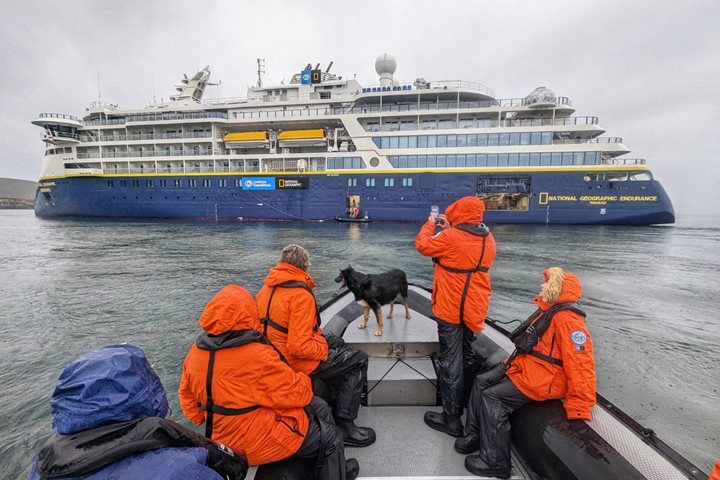
For seven hours the long, flat, grassy expanse of Salisbury Plain, on the northeast corner of South Georgia Island, was peppered with orange jackets on various trajectories. Some strolled busily up and down the beach in search of varied perspectives while others sat in silence, waiting for the details to come to them. Even on the ride back to our ship the sea was teeming with life. Groups of king penguins 50 strong swam laps around our Zodiacs as we tried to pull ourselves away and move on to the next destination.
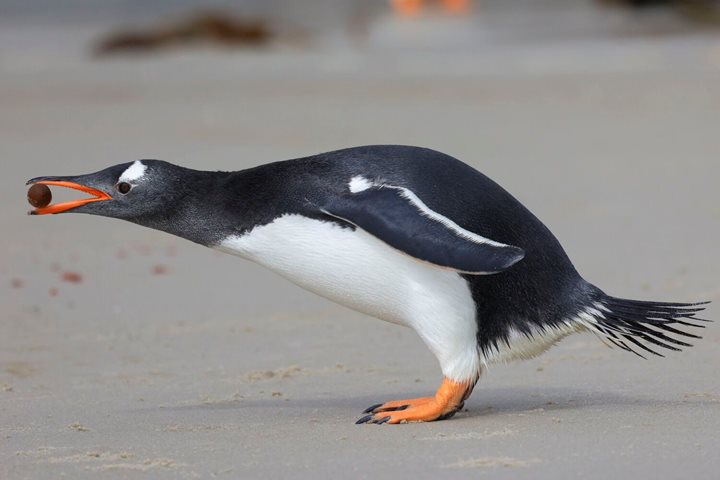
Four miles north and east of Salisbury Plain lies Prion Island, home to a completely different kind of wildlife experience. Past the familiar kelp-choked shores, curious fur seal pups, and molting gentoo penguins, we found a sturdy boardwalk leading into the heart of the island. Along its sinuous path we passed numerous birds so small they would go unnoticed if it were not for their incredible rarity. The South Georgia pipit is the only songbird found south of the polar front and is a heart-warming site in a place as hostile as this—especially when you are the size of a sparrow. Its diminutive size is all the more pronounced when you consider the other avian this path led us to; the wandering albatross.
Scattered across the tussocky summit of Prion Island approximately 50 wandering albatross nest sites can be seen at various stages throughout the year. Today we counted over 15 individuals perched atop pedestal-shaped nests made of mud and grass. Another half dozen were on the wing, helping to offer some semblance of scale and perspective to the dramatic, lush, stunningly beautiful place all of these animals call home.